Unschoolers Learning about Shakespeare
Let’s be honest—Shakespeare can feel intimidating.
The language is different. The themes seem complex.
But that’s just how school framed it.
Unschoolers, on the other hand?
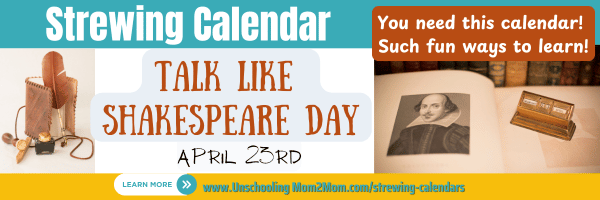
We get to approach Shakespeare with curiosity, creativity, and humor—especially on Talk Like Shakespeare Day (April 23rd)!
Instead of breaking it down line by line in a textbook, we bring it to life.
We talk like Shakespeare, watch the plays (and parodies), dive into dramatic reenactments, and explore the way his stories still shape the world today.
So how can you tap into this celebration—and let your kids learn through it all?
Subject Areas That Naturally Surface
You don’t need a textbook or a classroom to learn from Shakespeare.
Your kids don’t have to understand every line—or even love every story.
But you and the kids can explore his work in playful, meaningful, and very real-life ways.
(Maybe we can undo some of your own anti-Shakespeare scarring
that school left you with!)
Here’s what they’re actually learning when you step into the world of Shakespeare with curiosity and creativity:
Language Arts
- Vocabulary building – Shakespeare invented or popularized over 1,700 words! Kids absorb rich language just by hearing it in context.
- Figurative language – Similes, metaphors, puns, alliteration, and imagery are everywhere.
- Understanding tone and emotion – Through dramatic monologues, facial expressions, and even silly reenactments.
- Writing inspiration – Kids can write their own sonnets, journal entries from a character’s POV, or their own Shakespearean insults or compliments! (I have a bunch of tools at Pinterest!)
History & Culture
- Elizabethan life – What was the world like when Shakespeare was alive? The clothes, the politics, the roles of men and women—it’s a fascinating peek into the past.
- Theater history – The Globe Theatre, audience interactions, open-air performances.
- Historical figures and events – Many plays were based (sometimes loosely!) on real kings, wars, and scandals. You can learn about the culture and monarcy of the Elizabethan era.
- Life at the time - What WAS Life like during Shakespeare’s time? (plague, politics, class roles)
- Globe Theatre - How was it operated?
Social Studies / Psychology
- Human behavior – Why did Hamlet hesitate? Why did Lady Macbeth unravel? What does jealousy do to someone?
- Ethical dilemmas – What would you do in that situation?
- Power, betrayal, loyalty, and justice – Timeless themes that resonate in every generation.
Pop Culture & Media Literacy
- Modern retellings – From 10 Things I Hate About You to The Lion King, Shakespeare is everywhere. See if you can spot references to Shakespeare in other work.
- Parody and satire – SNL skits, YouTube reenactments, even meme culture use Shakespeare’s tropes.
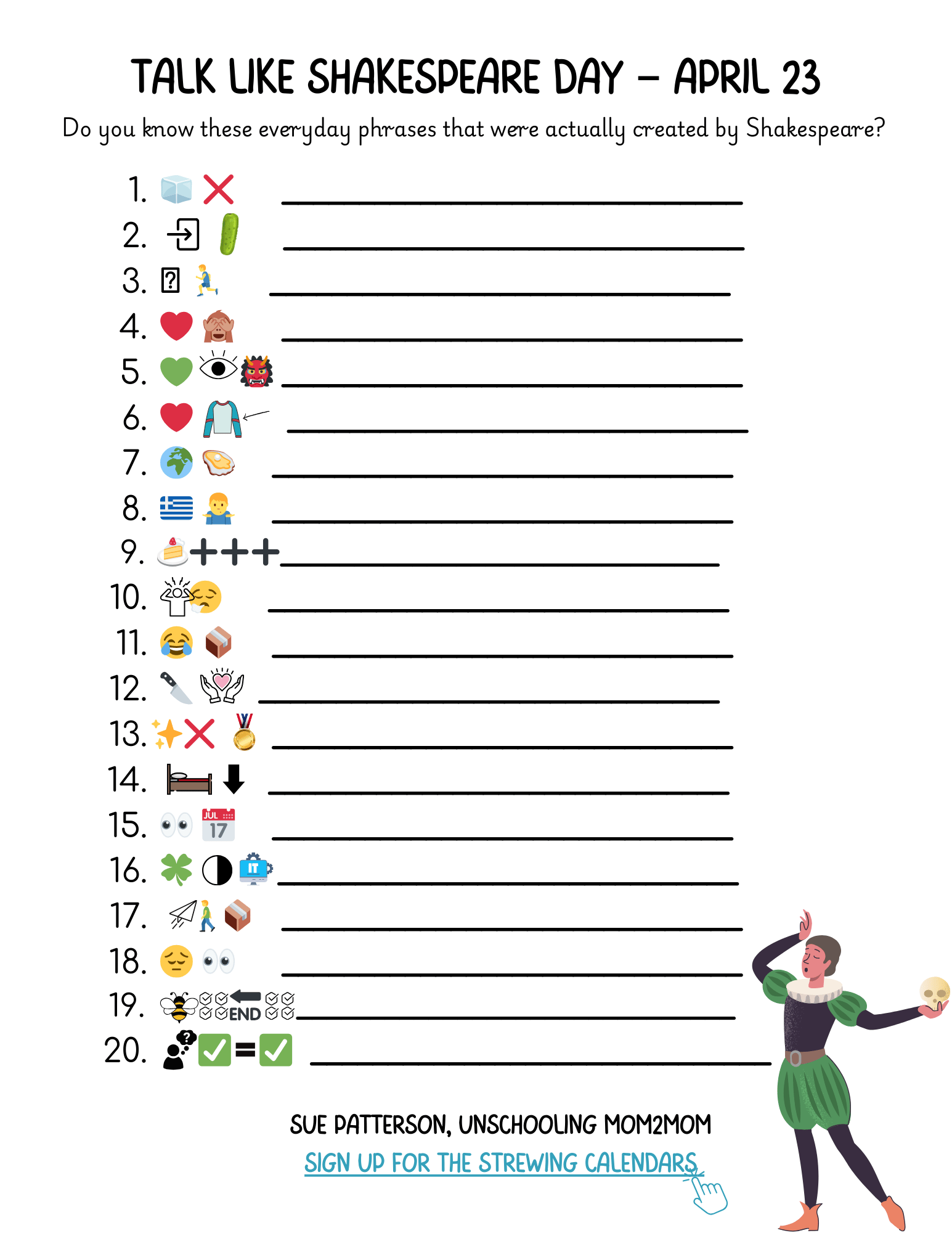
- Phrase origins – So many common expressions we use today came from his plays! How long can you go on Talk Like Shakespeare Day?
Fine Arts & Performance
- Acting & voice work – Performing even a single line can help kids better understand emotion, tone, and language.
- Set or costume design – Create paper crowns, royal scrolls, or designing their own stage.
- Makeup & character creation – Especially fun with villains or ghosts!
- Explore Music/Dance from the 1500s
🎥 Movies to Watch
Classic & Faithful Adaptations:
- Much Ado About Nothing
(1993 – Kenneth Branagh & Emma Thompson) - Hamlet (1996 – Kenneth Branagh, full text)
- Henry V (1989 – Kenneth Branagh)
- The Taming of the Shrew
(1967 – Elizabeth Taylor & Richard Burton)
Modern Takes & Teen-Friendly Versions:
- 10 Things I Hate About You (1999)
– based on The Taming of the Shrew - She’s the Man (2006) – inspired by Twelfth Night
- The Lion King (1994) – loosely based on Hamlet
- West Side Story (1961/2021)
– inspired by Romeo and Juliet - Gnomeo & Juliet (2011)
– animated fun with Romeo and Juliet
Parodies & Comedic Spins:
- The Reduced Shakespeare Company – especially The Complete Works of William Shakespeare (Abridged)
- Strange Brew (1983) – comedic retelling of Hamlet
- Any “Talk Like Shakespeare” YouTube challenge or TikTok trend
Shorts and Animations:
- William Shakespeare - Animated Biography
- Talk Like Shakespeare collection (YouTube Shorts)
- IMDB Series - Shakespeare - The Animated Tales
🗣️ Phrases We Still Say Today
Kids may be surprised to learn these came from Shakespeare:
- “Break the ice”
(The Taming of the Shrew) - “Wild-goose chase”
(Romeo and Juliet) - “Green-eyed monster” (Othello)
- “What’s done is done” (Macbeth)
- “The world is your oyster”
(The Merry Wives of Windsor)
- “Love is blind”
(The Merchant of Venice)
Once they see how much his words are still part of our language, Shakespeare feels a lot less distant.
💡 10 Unschooly Ways to Explore Shakespeare
- Watch a cartoon version of A Midsummer Night’s Dream
- Watch a kid-friendly YouTube summary or animated retelling of any of the plays.
- Compare The Lion King to Hamlet
- Create a comic strip or storybook version of a Shakespeare play
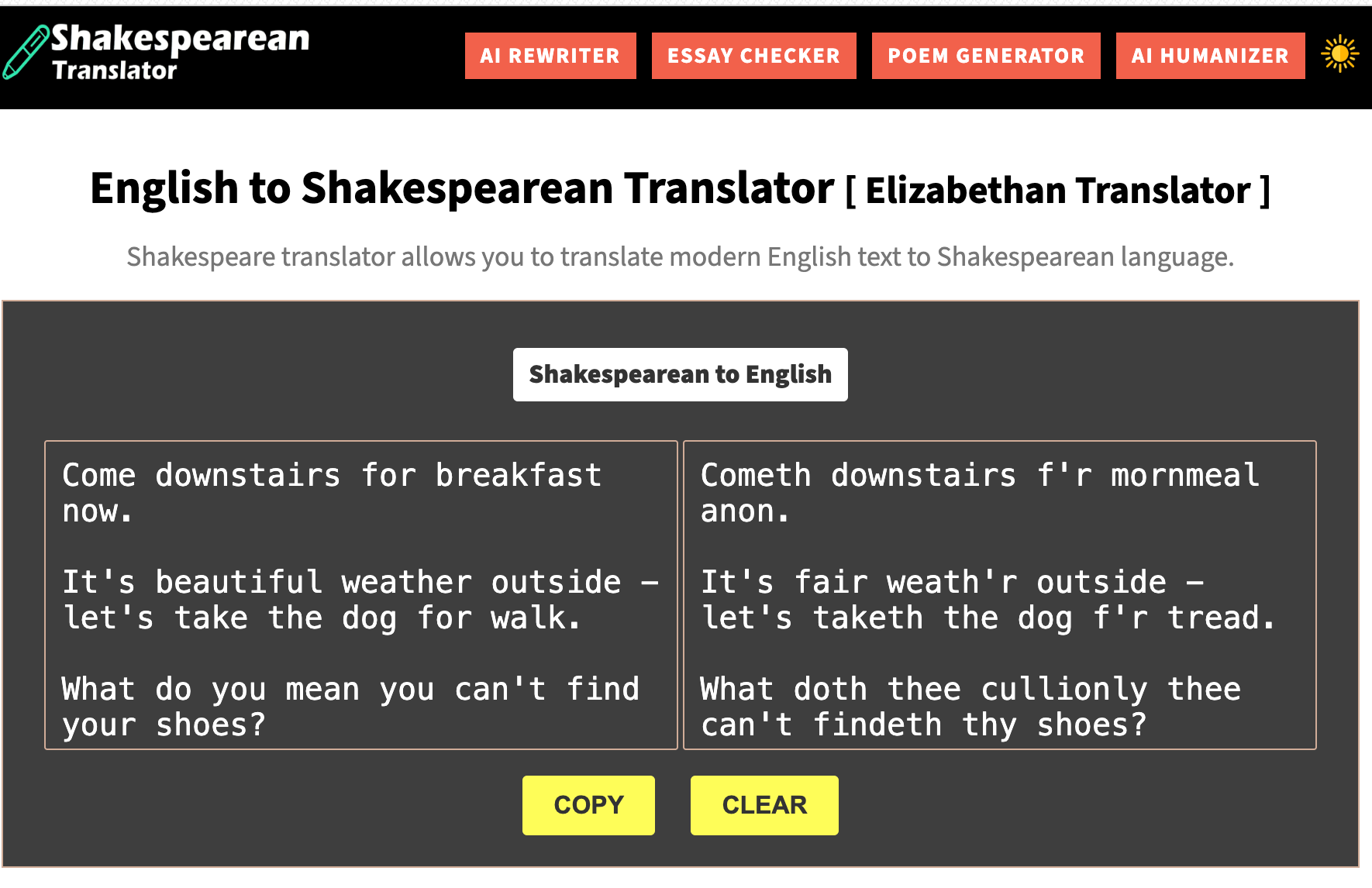
- Try speaking in Shakespearean English for a silly family dinner or car ride.
- Rewrite a scene in modern language--or text message format!
- Send insults and compliments Shakesepeare-style!
- Make paper masks and stage a mini scene with stuffed animals or Lego characters
- Read a quote of the day and guess what it means - do the Emoji Game Sue made!
- Watch 10 Things I Hate About You and spot the similarities to Taming of the Shrew
🎯 Bottom Line?
You don’t need to “get it all” to enjoy Shakespeare.
Kids don’t need to be older, serious, or scholarly.
They just need a doorway into the world—and then they can explore it in their own way.
For unschoolers, Shakespeare is just another rich world to dip into.
Maybe it sparks a deep dive...or maybe it’s a fun afternoon and a few new phrases.
Either way, it counts.