Quirky Kids: Unschooling and Neurodivergence

In This Article
- Why neurodivergent kids often struggle in school
- How unschooling supports different learning styles
- Why removing school pressure helps kids relax
- Resources for understanding neurodivergent children
- How connection-based parenting supports learning
Podcast Transcript:
Why Neurodivergent Kids Thrive Outside School
Is Your Child a little... Quirky?
That’s a word I used sometimes back in the 90s and early 2000s. Back then, we didn’t have the same language we use now.
Maybe a child didn’t pick up on social cues easily.
Maybe eye contact was hard.
Maybe they melted down when they started losing a board game.
At the time, we might have just said they were quirky.
Before Neurodivergence Was Common Language
This was before diagnoses like Asperger’s were widely used. The termneurodivergent wasn’t part of everyday conversation yet. And while special needs certainly existed, it wasn’t talked about the way it is today.
What we did start to see, though, was the beginning of the big wave of ADHD diagnoses and medications like Ritalin.
But here’s why I’m bringing this up.
We’ve come a long way in what we understand about brains, about kids, and about parenting children with different learning styles and coping strategies.
And maybe even more importantly, we now have access to so many more resources.
Whether your child has an official diagnosis or not, parents today can tap into the experience of people who have been studying this for years.
For example, many parents in the unschooling community have been learning from people like Amanda Diekman and Naomi Fisher. Their work focuses on understanding kids in ways that move away from constant demands and toward connection and collaboration.
And that fits very naturally with the unschooling approach.
Because as unschoolers, the goal is to meet our kids where they are.
Why Parents Sometimes Feel Unprepared
The tricky part is that sometimes we genuinely don’t know what to do.
And part of that is because of how many of us grew up.
Some of us had our own little “quirky” traits growing up. Maybe adults called us difficult. Maybe they said we were rebellious. Maybe we were “a handful.”
Or maybe you were the opposite.
Maybe you were the quiet, compliant kid who worked really hard to keep the adults around you happy. And maybe you carried a lot of anxiety because you weren’t always sure how to meet those expectations.
So now we become parents.
And many of us didn’t grow up seeing a lot of kindness or understanding when kids struggled. When things got tense, we didn’t always see adults modeling calm, informed ways to handle those moments.
Back in the 90s, honestly, we just didn’t know as much.
But we do now.
And that’s important.
Because whether your child has a neurodivergent diagnosis or not — and whether you do or not — there is so much we can learn from the parents and professionals who have spent years studying these patterns.
Why Unschooling Often Works for Neurodivergent Kids
Interestingly, the unschooling world overlaps with this in a really meaningful way.
Many families come to unschooling because their child struggled in school.
Sometimes there’s a diagnosis involved. Sometimes there isn’t. But parents can see that the school environment simply isn’t working for their child.
And here’s something many families discover.
When you remove the constant pressure of school — the schedules, the expectations, the comparisons — things often improve dramatically.
Kids can relax.
Parents can start focusing on connection.
Instead of constantly noticing where a child is falling short, families can start noticing strengths.
They can build on interests.
They can develop coping strategies that actually fit the child instead of forcing the child to fit the system.
And that’s one of the reasons unschooling often works so well for neurodivergent kids.
Research and Resources Are Expanding
Another important shift has happened over time.
Not only has science learned more about how brains work and how neurodivergence shows up in daily life…
But the
homeschooling movement itself has grown.
Which means the conversation isn’t always focused on helping kids survive in school.
There are now professionals studying kids outside of traditional school settings — which makes their insights incredibly helpful for families who are unschooling.
In my membership community last year, we actually spent some time discussing a few books that many parents found really helpful.
One is Declarative Language Handbook by Linda Murphy.
Another is Low Demand Parenting by Amanda Diekman.
And another is A Different Wayto Learn by Naomi Fisher. (more books here)
Each of these approaches offers tools for understanding kids who may struggle with traditional expectations — and they do it in ways that align really well with an unschooling mindset.
Leaving School Can Change Everything
A lot of families leave the school system because things just aren’t working for their child.
But there’s often a lot of fear around that decision.
Parents worry that leaving school will somehow make things worse.
But very often, bringing a child home actually opens the door to something better.
When you can step away from constant evaluation and comparison, you can focus on connection.
You can focus on understanding what your child needs.
You can begin to identify strengths that might have been hidden in the school environment.
Life can start to feel very different.
Learning More at the Unschooling Summit
And that brings me to why I’m talking about this right now.
The Unschooling Summit is happening this month.
There are many speakers there who focus specifically on neurodivergence in unschooling families.
The event is free, and I’ve included a link in the show notes.
If you sign up using that link, it also helps support Unschooling Mom2Mom, which I really appreciate.
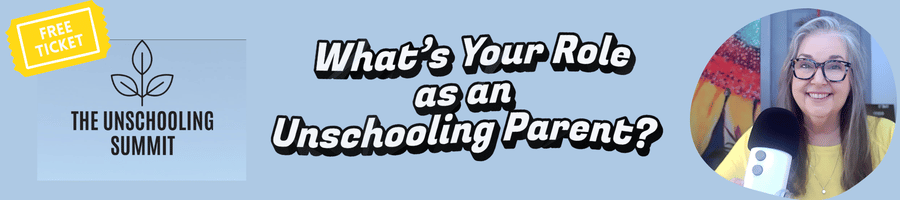
I’ll be speaking on the second day about the Role of the Unschooling Parent — especially what happens when unschooling doesn’t go the way you expected.
Because that happens sometimes.
And learning how to navigate those moments is part of the journey.
There will be over 60 speakers at the summit, and quite a few of them will be talking about challenges that come up in neurodivergent families.
There will also be roundtables and fireside chats where you can actually ask your own questions.
I’m really looking forward to hearing from some of these speakers myself.
Speaking at the Unschooling Summit - specifically about unschooling & neurodivergence
Dr Naomi Fisher - When to Encourage Your Unschooler, and When To Hold Back (ND / PDA)
Kristy Forbes - Why Compliance Isn't the Goal With Your Neurodivergent Child (AuDHD / PDA)
Em Hammond (NeuroWild) - Helping Children Build Their Capacity (AuDHD / PDA)
Amanda Diekman - Letting Go of Perfectionism (AuDHD / PDA)
Eliza Fricker - Self Directed Learning and Your PDAer (AuDHD / PDA)
Melissa Crockett-Joyoue - Building Nervous System Capacity for Unschooling Parents (AuDHD / PDA)
Meghan Suniga Davies - Out in the World with Neurodivergent Teens (ND)
Fireside Chat - (Deep dive) This isn't How I thought it Would Be! (Heidi Steel, Danii Oliver & Anna Brown - (ND families)
Live Roundtable - Neurodivergent Families (panel TBC but includes Amanda Diekman (PDA), Elspeth Hetrick (known as Neurodivergent Parenting: Think Outside the Box on FB) (PDA) Zakiyya Ismail) (Rest of panel TBC)
Live Roundtable - Taking Care of Ourselves - Claire Gillespie & Stacey Yates Sellar (both w/ND kids), Essie Richards (ND)
Listen to Melissa Crockett-Joyoue
And speaking of that...
I have a short clip coming up from Melissa, one of the co-founders of the Unschooling Summit. She’s an unschooling mom herself and part of a neurodivergent family.
But before we play that clip, I'd like to mention that next week, we're celebrating five years of the podcast!
Melissa is one of our first guest voices to appear on the Unschooling Mom2Mom podcast!
It’s a quick clip, but it might be something we do more of in the future — bringing in other voices occasionally so you can hear from different experiences in the unschooling community.
Let me know what you think about that.
Let’s listen to her now...
The Bottom Line for Parents
The bottom line is this.
All of us have kids who struggle sometimes.
All of us run into moments that are confusing or challenging.
So why not learn from parents and professionals who have spent years thinking about these situations — especially those who understand them within an unschooling framework?
You can join me at the Unschooling Summit.
I’ll actually be participating in two places — my talk on the role of the unschooling parent, and a final panel discussion about grown unschoolers.
Again, the tickets are free, here's the link.
Want More Unschooling Encouragement?
If these episodes help calm your nerves a little about unschooling, be sure you follow and subscribe so new episodes will keep showing up in your feed.
And if you’d like daily encouragement while you figure this out, you can try the Creating Confidence Daily app free for seven days — that link is in the show notes too.
Thanks for listening.
Happy unschooling.
Frequently Asked Questions
About Neurodivergent Kids and Unschooling
What does neurodivergent mean?
Neurodivergent describes people whose brains work differently from what society considers “typical.” This can include ADHD, autism, dyslexia, PDA, sensory differences, and other variations in how people process information and interact with the world.
Why do some neurodivergent kids struggle in school?
Traditional schools often rely on rigid schedules, social expectations, and constant evaluation. For some neurodivergent kids, those demands can create stress, frustration, and a sense that they are always falling short.
Can unschooling work well for neurodivergent kids?
Many families find that unschooling works well because it removes constant pressure and allows learning to develop around the child’s interests, strengths, and natural pace.
What resources help parents understand neurodivergent kids?
- Facebook Group: Unschooling Every Family: Embracing Neurodivergent and Disabled Learners
- Blogpost/Podcast: Unschooling Neurodivergent Children
- Online Publication:
Unschooling and Thriving
Do kids need a diagnosis to benefit from this approach?
No. Many families notice that certain strategies work well for their child even without a formal diagnosis. Understanding how your child thinks, learns, and copes can be helpful regardless of labels.