Why Deschooling Is Really for Parents
Deschooling is often described as something kids need
— but in reality, it’s parents who feel it most.
When families step away from school or move toward unschooling, the structure may disappear, but school-conditioned thinking often lingers. This post explores what’s really happening during deschooling — especially when learning stops looking familiar.
In this Unschooling Mom2Mom episode about deschooling, we talk about:
- Why deschooling isn’t a one-time reset for families
- What deschooling looks like when kids seem to be “doing nothing”
- Why parents often feel unsettled during the deschooling phase
- How school-conditioned thinking affects how parents interpret learning
- Why deschooling is active parent work, not passive waiting
Read the Transcript:
A lot of parents think deschooling works like a big red reset button.
You know the kind you see on TV or in ads —
Just step away from school, give it some time, and everything magically resets.
The kids relax.
They self-direct.
They “find themselves.”
And a few weeks later... learning emerges.
And usually, parents think, maybe a month.
If we’re being honest? We're thinking it's going to be less time than that.
But what actually happens is this:
Kids come home.
They rest.
They watch shows.
They scroll.
They hang out on the couch.
And after a couple of weeks, parents start to panic and say:
“OMG... this can’t really be what we’re supposed to be doing, is it?”
“They’re just vegging out.”
“When does the real learning start?”
"My kids are so unmotivated!"
Those sentences tells us everything — and also gets almost everything wrong.
So today, I want to talk about what deschooling actually is…
what’s going on when it looks like nothing is happening…
and why parents need deschooling just as much as kids do.
Hello!!
I’m Sue Patterson,
and this is the Unschooling Mom2Mom Podcast.
After 30 years in this community,I've learned what works and what doesn'twork when it comes to unschooling. I have a lot of resources at the website
that can help you build confidence, trust your kids, and see learning everywhere.
Each week, I'm bringing these 10 to 15 minute pep talks to give you a little reassurance.
Unschooling really does work.
So, be sure to take a minute to like or subscribe to the podcast. Whether you're listening or you're watching at YouTube, it'll help us stay connected and you'll know when I have another podcast for you. It's an easy way to help you tackle some of the
worries that are holding you back.
I'm glad you're here. Let's dive in. So,

What’s Wrong With That Panicky Thought
Let’s start with this idea that kids “aren’t learning” during deschooling.
Remember this though:
All brains are always learning.
Even when it looks like vegging out on the couch.
They might be:
- watching something on YouTube
- following a storyline in a show
- reading comments
- picking up language, humor, social cues
- thinking, processing, recovering
The brain doesn’t turn off because school stopped.
Now — it might not be what we want them to be learning. Maybe it doesn't look familiar or fit neatly into the common subjects for their age if they were in school.
But that’s our issue, not theirs.
Most parents have a very narrow picture of what “successful deschooling” is supposed to look like.
Somewhere deep down, we imagine this moment where our kid stretches, yawns, and says:
“Wow! That was refreshing.
Where’s my algebra book?”
Let me save you some stress.
That is not going to happen.
Kids don’t wake up from deschooling like Rip Van Winkle and reach back for school.
And honestly?
If they did — that would mean deschooling
didn’t work.
What Deschooling Is Actually Doing
Here’s the real goal:
You’ll know deschooling is complete when you stop thinking about school at all.
When learning and life just weave together...
and school becomes a distant, fading memory.
But before that happens, school thinking keeps sneaking in.
And that’s why deschooling is not passive.
Another big misconception is that parents are supposed to just step back, wait, and let everything unfold — no involvement, no invitations, no engagement.
That’s not deschooling.
Deschooling asks parents to be actively connected.
That might look like:
- baking brownies together and watching the British Baking Show
- diving into Stranger Things lore
- driving to the skate park
- upgrading the internet speed
- sharing music, clips, games, ideas
The point isn’t control.
The point is
connection.
This is how parents learn to partner with their kids — to understand their interests and help them see that the world is full of things worth exploring.
Unschooling kids don’t live small lives.
They live full, rich, individualized lives.
And deschooling is the bridge from a school-shaped life...
to a life that actually fits your child.
I like to think of it as Dorothy in Kansas — everything black and white —
and then stepping into Oz, where suddenly the world has color.
Why Parents Need Deschooling Too
Deschooling isn’t just for kids.
Parents have to deschool from:
- timelines
- checklists
- comparison
- and the idea that learning has to look a certain way to be real
That’s why that lay-around phase feels so uncomfortable.
It’s not because learning isn’t happening.
It’s because
school thinking is still loud.
So you’ve stepped away from school — and that feels like the right decision - but the thinking doesn’t automatically change.
We don’t just leave school behind and suddenly see learning differently.
The habits we learned growing up — about pace, productivity, comparison, and conformity — tend to stick around.
They show up in small moments.
... When things feel “too relaxed.”
... When play looks like a break instead of learning.
... When a quiet day feels uncomfortable.
... When you catch yourself wondering if enough is happening.
Not because you don’t trust your kids.
Not because you’re unsure about unschooling.
But because school shaped how all of us learned to interpret learning.
Deschooling is the ongoing process of becoming more aware of the assumptions we inherited — and then choosing which ones still fit your family.
And that process unfolds over time.
Kids grow and change.
And so do we as parents.
You don’t deschool once and move on.
You revisit it.
You adjust.
You notice when old frameworks show up — especially under stress or outside pressure — and you decide how much influence they get.
That’s why I created the Deschooling Toolkit (See details Below)
Reminders...
Deschooling isn’t about doing nothing.
It’s about letting go of the school version of life...
and stepping toward something more flexible, more connected, and more real.
If this is where you find yourself right now, the Deschooling Toolkit was made for you.
You can find it at Unschooling Mom2Mom.
You don’t use everything at once.
You don’t rush through it.
It’s there so you don’t have to keep wondering:
“Is this really how it’s supposed to look?”
Because yes — this phase is part of the process.
The Tool I Made for This Exact Moment
It’s not a reset button.
It’s not a “wait it out” plan.
It’s support for this phase — when school thinking keeps creeping in.
Inside, you’ll find:
- 365 Days of Deschooling to help families explore learning through real life
- A
parent guide that helps you recognize school-shaped thoughts when they show up
- Deschooling affirmation cards for those moments when doubt gets loud
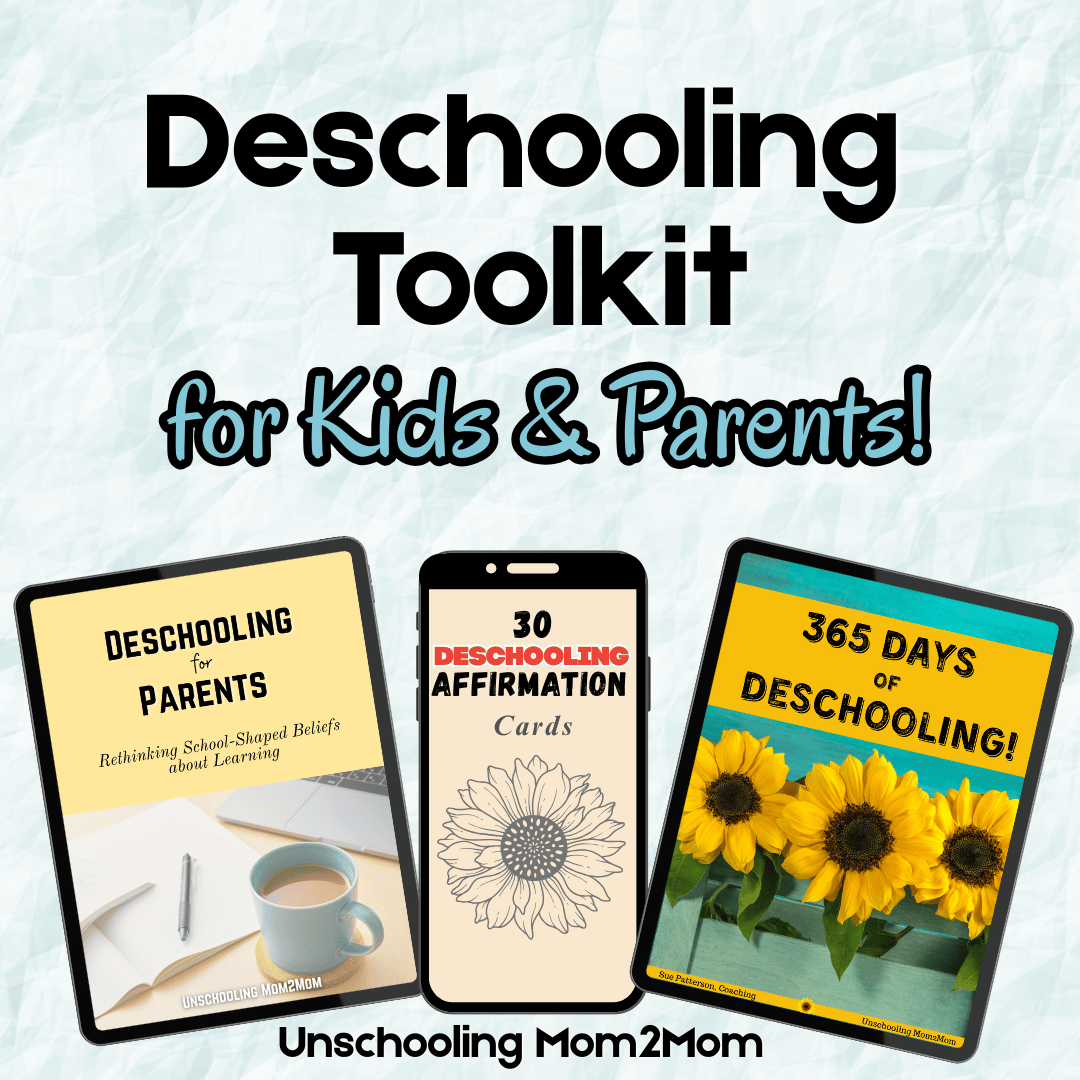
Deschooling Toolkit - for Kids and Parents!
Calm the Panic. Clear the Fog. Rebuild Trust.
You understand unschooling.
But some days, it still feels like:
- “This looks like too much downtime.”
- “We should be doing more.”
“What if we’re missing something important?”
That tension isn’t a sign you’re doing unschooling wrong.
It’s a sign that school thinking hasn’t fully loosened its grip yet.
Deschooling is the part most families don’t realize they need — and it’s often the reason everything feels harder than it should. This toolkit is here to help you slow down, reset, and breathe again.
What This Toolkit Is (and Isn’t)
This is not:
- a curriculum
- a challenge
- a schedule
- a “do this every day” program
It’s a gentle reset — something you open when school-conditioned thoughts get loud.
You don’t work through it in order.
You use what you need, when you need it.
What’s Inside the Deschooling Toolkit?
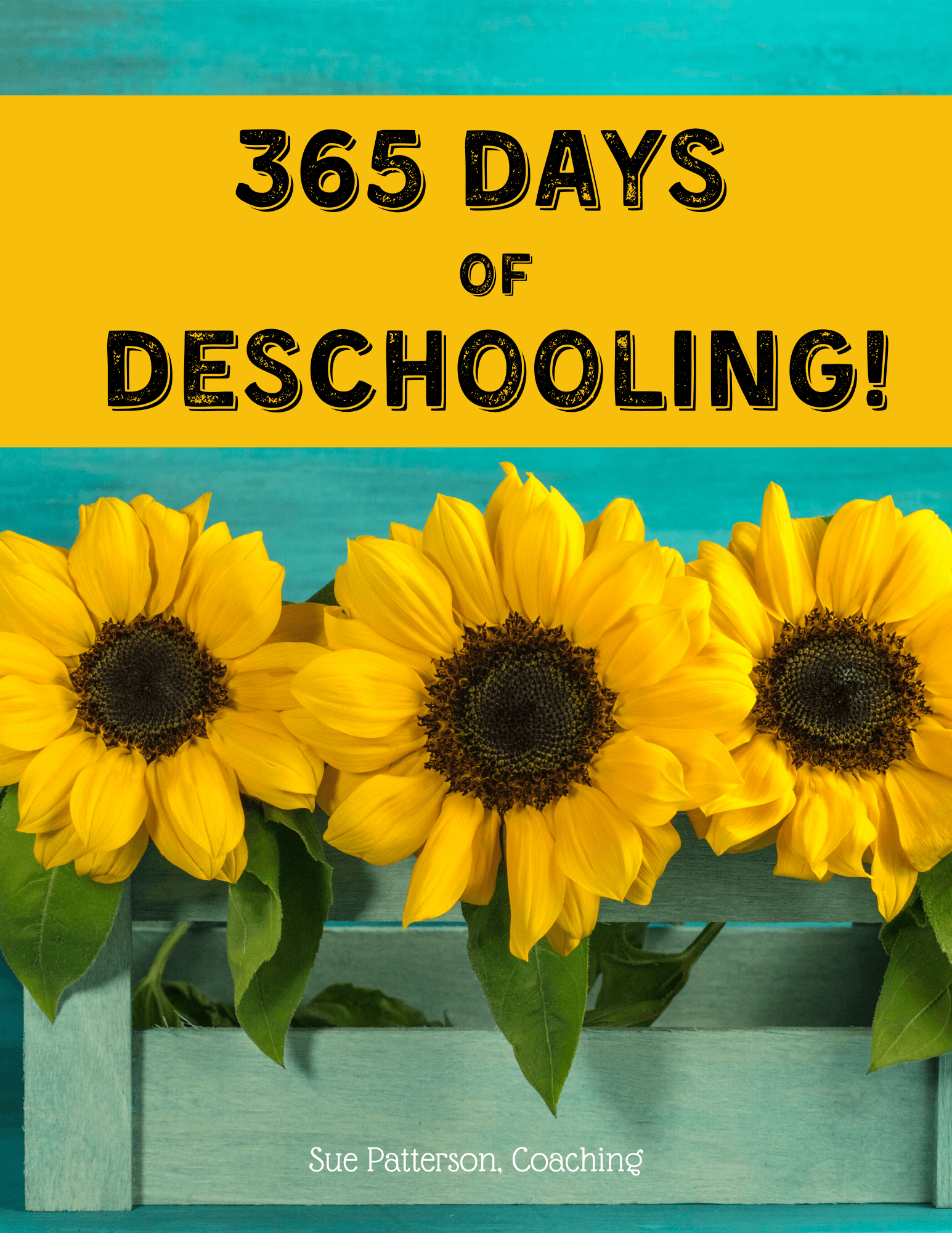
🌱 365 Days of Deschooling (Kids)
A full year of simple reminders that learning is already happening.
This helps:
- take pressure off your kids
- quiet fear about “not enough”
- shift your focus from performance to real life
You’ll start noticing learning where school taught you not to look.
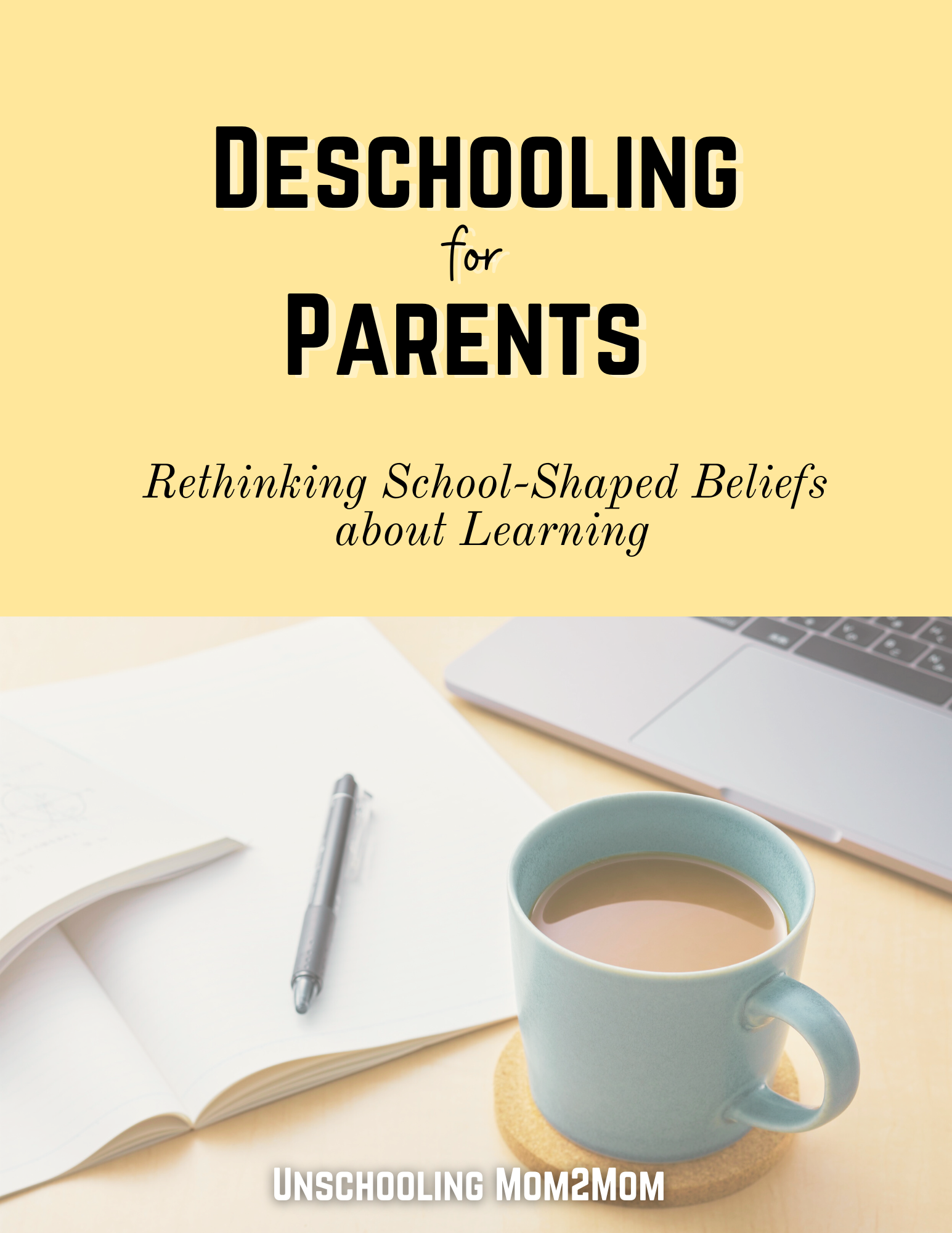
🧠 Deschooling for Parents: Guided Reflections
Short, focused pages designed to interrupt common school-conditioned reactions like:
- productivity panic
- fear of falling behind
- comparison
- urgency to “fix” things
Each page helps you pause, reframe, and notice what’s actually happening — without judgment.
This is the deschooling guidance you really need!
💛 30 Days of Deschooling Affirmation Cards
Gentle daily reminders to steady your nervous system and rebuild trust.
These aren’t generic affirmations.
They’re grounding statements for real days with the kids — the messy, quiet, uncertain ones.
Use one a day, or pull one when you feel stuck.
There’s nothing to “keep up with.”
How to Use This Toolkit
There’s no right order.
Open the page that feels loud.
Pull a card when your thoughts spiral.
Notice what shifts when you start to remove the pressure.
Deschooling isn’t something you finish.
It’s something you return to.
Who This Is For
This toolkit is for you if:
- You get unschooling — but still feel anxious or unsure
- You keep snapping back to school-based worries
- You want to understand why you keep second-guessing yourself.
- You’re looking for calm solutions that makes sense.
Who This Is NOT For
This toolkitwon’t teach you what unschooling is.
👉 If you’re brand new and want an overview of how unschooling works,
Unschooling 101 is the best place to start.
This toolkit is about unlearning what's holding us back.
One gentle place to land when school thinking creeps back in.