Deschooling Isn’t Something You Finish

Deschooling isn’t something parents finish once. As kids grow, new stages often bring old school-based fears back. That doesn’t mean something is wrong—it means it’s time to revisit deschooling with fresh eyes.
Do You Need to Revisit Deschooling?
Signs It’s Time Again
Deschooling is often treated like a phase you move through at the beginning of unschooling.
You step away from school structures.
You rethink learning.
You loosen schedules and expectations.
And then you’re supposed to be done.
But most families don’t experience it that way.
Deschooling isn’t a one-time reset. It’s an ongoing process of noticing how old assumptions resurface as children grow and learning looks different than it did before.
What felt fine when your child was younger can start to feel uncertain at a new age.
That doesn’t mean something went wrong — it usually means you’ve reached a new layer.
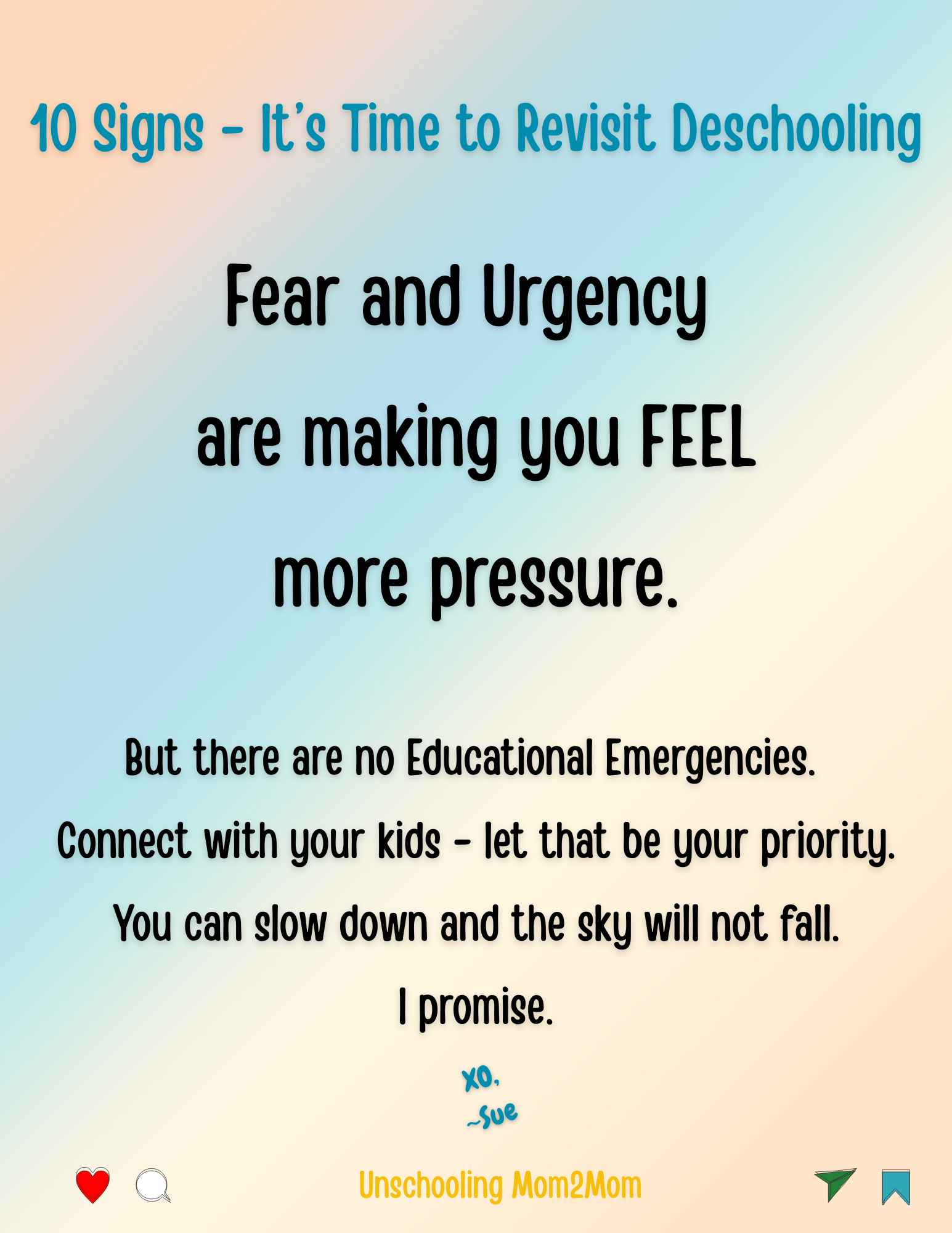
Why Deschooling Resurfaces as Kids Get Older
As children grow, learning often becomes:
- less visible
- more independent
- harder to measure
- easier to compare
That shift can quietly reactivate old school-based fears, even in families who felt confident before.
New stages bring new questions, especially when learning becomes harder to see.
What seemed fine at 7 can begin to worry you when it still looks the same at 11.
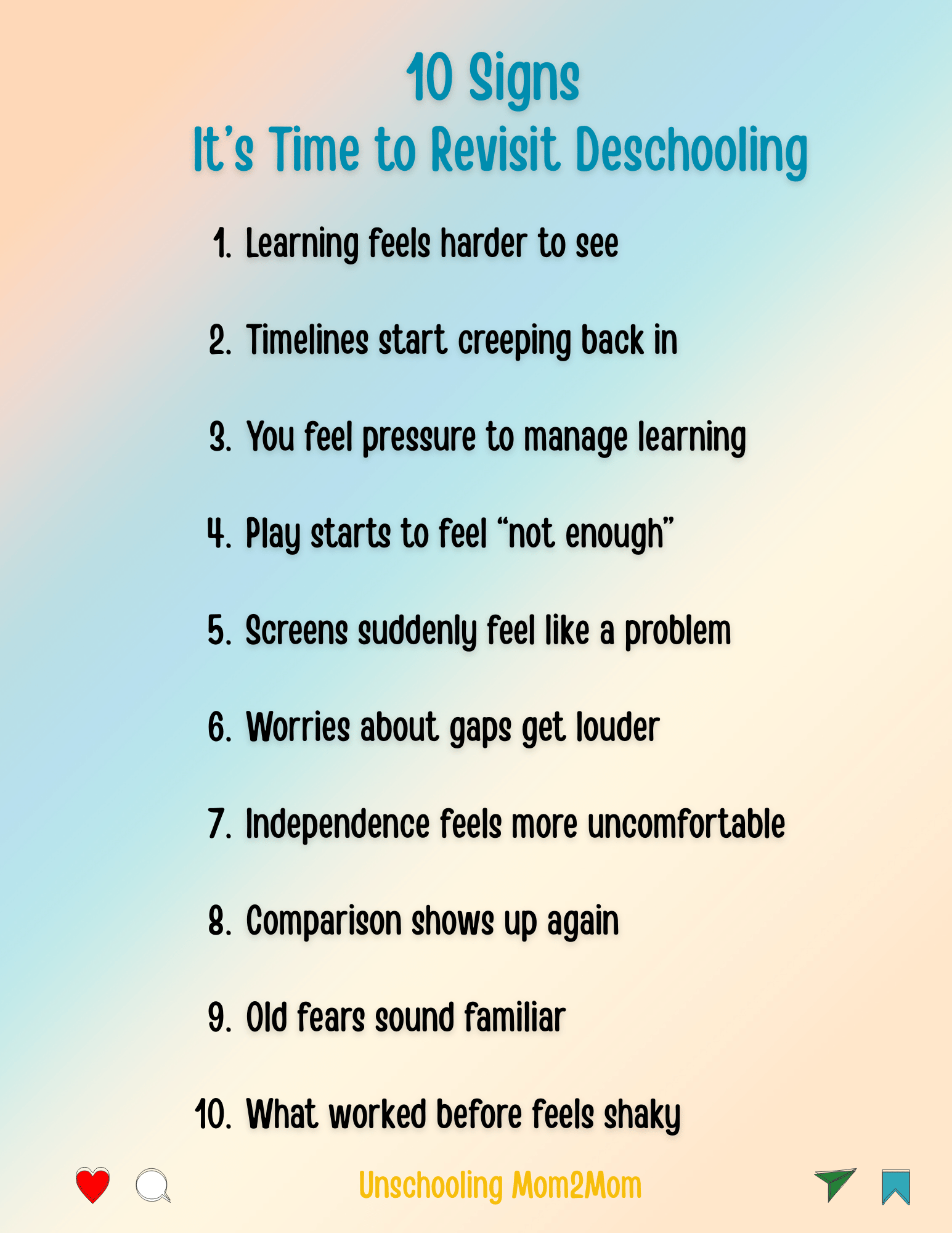
Signs It Might Be Time to Revisit Deschooling
- You feel uneasy when learning is harder to see
- Grade-level thinking or timelines start creeping back in
- You feel pressure to manage or direct learning again
- Play, screens, or conversation suddenly feel “not enough”
- You worry about gaps even when growth is happening
- Independence feels more stressful than before
- What worked in earlier years no longer feels steady
These are red flags — just not about your child, or whether unschooling is “working.”
They point to school-based thinking resurfacing for parents.
Deschooling Comes in Layers, Not a Straight Line
Deschooling doesn’t end once you’ve “done it right.”
Each new stage invites you to notice old patterns with fresh eyes.
Each age shift asks for recalibration, not more control.
Revisiting deschooling isn’t starting over. It’s responding to change.
What Helps When It’s Time to Revisit Deschooling
At this point, most parents don’t need more ideas or strategies.
They need help untangling old thinking and reassurance that this moment is normal.
The
Deschooling Toolkit
is meant for moments like this — when old school-based thinking resurfaces and you need help slowing down and recalibrating.
It includes three simple resources:
- Deschooling for Parents – a reflective guide that helps you notice which worries are coming from school-shaped beliefs, with prompts and reframes to interrupt automatic reactions and revisit your thinking as often as needed.
- Deschooling for Parents
- 365 Days of Deschooling – a kid-focused resource that helps make everyday learning more visible through real-life activities, ideas, and reminders, especially when learning feels quiet or unchanged at a new age.
- 365 Days of Deschooling - 24Q4
- Affirmation Cards – short, grounding reminders to return to when doubt spikes or urgency takes over, offering steady perspective rather than motivation or hype.

Deschooling isn’t “finished” after your first few months of homeschooling or unschooling.
It comes in layers.
As kids grow, familiar fears tend to show up again
— and when they do, it helps to notice them with a quiet “there it is”
and return to deschooling.
FAQ: Revisiting Deschooling as Your Child Gets Older
When is deschooling over?
Deschooling isn’t a one-time phase at the beginning of homeschooling or unschooling. As children grow and learning becomes more independent, old school-based fears can resurface. Many parents revisit deschooling in layers over time.
Why do unschooling doubts come back?
Unschooling doubts often return when learning becomes less visible or harder to measure. As kids get older, parents may start comparing progress to grade levels or worrying about learning gaps, even if growth is happening.
What are signs I need to revisit deschooling?
Common signs include worrying about grade-level expectations, feeling pressure to manage learning again, anxiety about gaps, or discomfort with your child’s independence. These usually point to school conditioning resurfacing — not a problem with your child.
What should I do if I’m worried about learning gaps?
Start by noticing whether the fear is coming from comparison or old school standards. Instead of tightening structure, pause and observe where real-life learning is already happening. Recalibrating your mindset is often more helpful than adding curriculum.
Is it normal to question unschooling as kids get older?
Yes. New developmental stages bring new questions. What felt okay at 7 can feel uncertain at 11 — not because unschooling isn’t working, but because growth looks different at each age.