
What is Unschooling?
new to unschooling? Start Here
What Is Unschooling?
Learning Without School at the Center
Unschooling is a way of living and learning that begins with trust: trust that children are natural learners, that meaningful learning happens far beyond school lessons, and that families can build a rich life around curiosity, connection, and the child in front of them.
It does not mean doing nothing. In fact, unschooling works best when parents are deeply engaged with their children and actively helping them discover more of the world. It means stepping away from the belief that learning must be divided into subjects, delivered on a fixed schedule, or measured against a classroom timeline.
Prefer to Listen or Watch?
Hear Sue explain the foundations of unschooling in a short podcast episode or watch the video version.
HOW CHILDREN LEARN
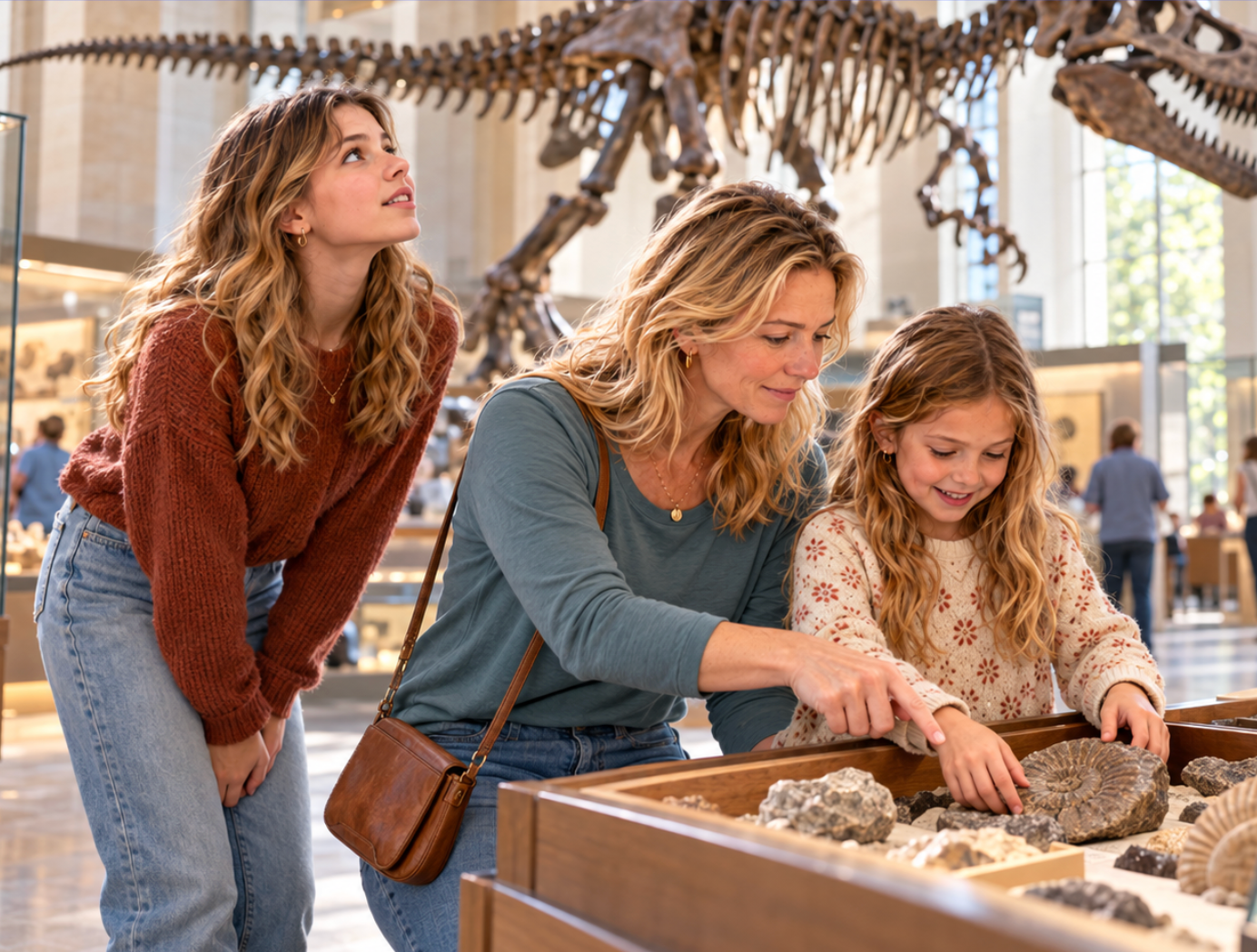
Learning Happens When the Learner Is Engaged
When the learner is not engaged, an incredible amount of time can be spent preparing lessons and trying to impart knowledge to someone who is only halfway listening. You cannot simply pour knowledge into a child’s head and expect it to stick. Unschooling places the focus on the child’s learning rather than the adult’s teaching. It pays attention to the questions, interests, problems, and experiences that make a child want to know more.
That engagement may grow through play, conversations, experiments, stories, mistakes, friendships, projects, travel, games, work, and daily family life. Learning is not limited to the moments that resemble school.
Connection is the Priority
Key Ideas
What Unschooling Changes
Unschooling shifts the focus away from the mechanics of school and toward how children actually learn.
Curriculum Is Not Essential
Curriculum, scope and sequence, quizzes, grades, and divided subjects are tools of schooling, not requirements for learning.
Opportunities Are Everywhere
Get ongoing encouragement, live coaching, useful resources, and connection with other parents who understand the realities of unschooling.
Curiosity Leads the Way
Parents partner with children, noticing when to offer an idea, help find a next step, or leave room for independent exploration.
Learning and Life Stay Woven Together
Learning does not begin at a certain hour or stop when an assignment ends. It happens throughout real family life.
Unschooling in Real Life
What Does Unschooling Look Like?
There is no single unschooling schedule or set of rules. One child may spend weeks building elaborate worlds in Minecraft. Another may become absorbed in baking, animals, filmmaking, history, coding, or a favorite book series.
The details differ. What connects unschooling families is learner-driven education, meaningful connection, and trust.
What Is the Parent’s Role?
Unschooling is not hands-off parenting. Parents remain active, interested, and available.
An unschooling parent may:
- Notice emerging interests and offer relevant resources
- Help a child gain access to people, places, materials, and experiences
- Answer questions or help find someone who can
- Share interesting ideas without requiring a particular response
- Support a child through frustration, uncertainty, and changing interests
- Protect time for play, rest, exploration, and deep engagement
- Maintain the family relationships and rhythms that make learning possible
- Help older children pursue classes, work, college, travel, or other goals
The role shifts as children grow. What remains is a relationship built on attention, respect, and collaboration.
GET THE HELP YOU NEED
Start With the Question in Front of You
Learning Without Curriculum
Find practical help with reading, writing, math, motivation, testing, and fears about learning gaps.
Switching from
Traditional Homeschooling
So many parents start with a more familiar curriculum-driven approach but find it doesn't fit your kids (or even yourself!) You have options!
Unschooling Teens
Navigate the teen years while preserving trust, connection, and your teen’s ownership of their learning.
Pre-School & Kindergarten
Younger children naturally benefit from an unschooling approach to learning. Find resources for our littlest unschoolers.
Deschooling
Learn what to do after leaving school, why the transition can take time, and how to begin creating a different rhythm at home.
Screens & Gaming
Move beyond automatic screen-time battles and look more closely at what your child is doing, learning, creating, and connecting with online.
Socialization
Rethink ideas about social development and consider the relationships, communities, and interactions your individual child actually needs.
Outside Pressure
Respond to questions from relatives, friends, and strangers without allowing their fears to determine what happens in your family.
Is Unschooling the Same as Homeschooling?
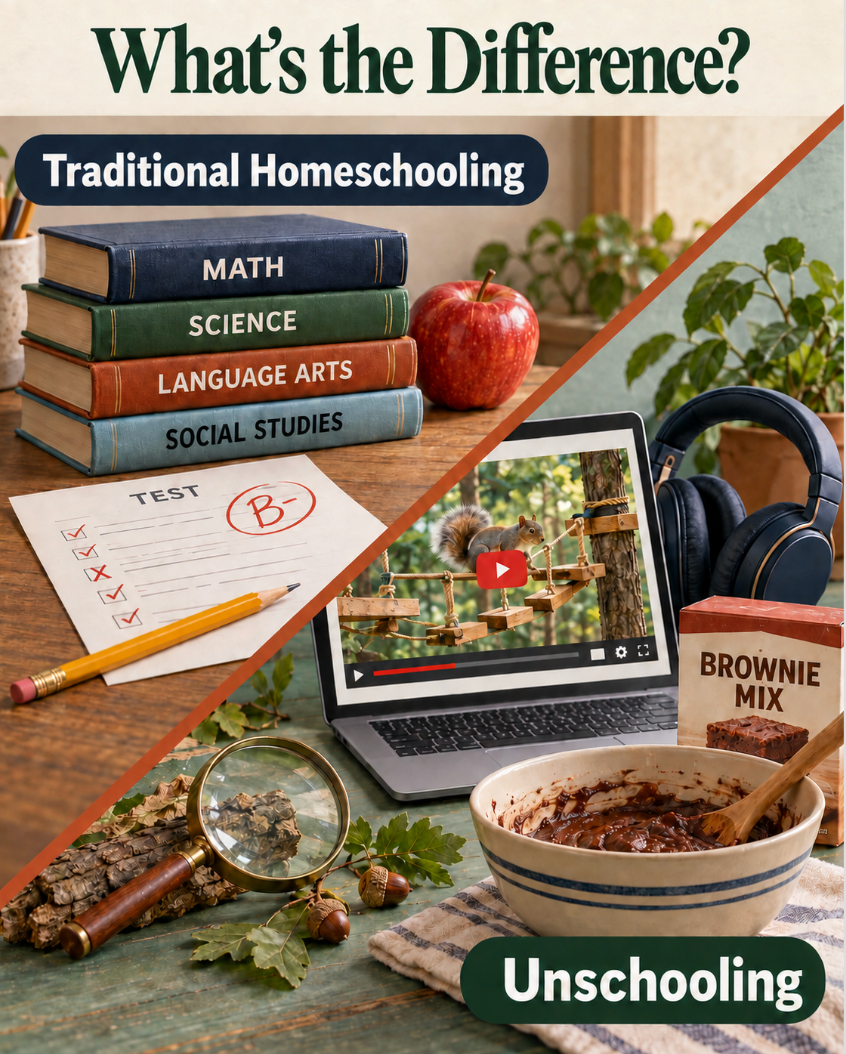
Unschooling is one approach to homeschooling, but it often looks very different from school-at-home.
Traditional homeschooling usually follows a planned curriculum similar to school, with subjects, assignments, and adult-directed lessons.
Unschooling organizes learning around real life, individual interests, and the needs of the child rather than a predetermined academic sequence.
Some families move gradually between approaches. Others use selected classes or curriculum while remaining strongly interest-focused in the rest of their lives. The label matters less than understanding why you are making a choice and whether it is helping your family.
For more information on this...
Listen/Read:
Unschooling vs Homeschooling: Why it feels so different day to day
UNDERSTANDING THE REQUIREMENTS
Can Unschooling Really Be Legal?
Yes. In the United States, unschooling is practiced legally under each state’s homeschooling laws. The learning approach may be flexible and learner-driven, but families are still responsible for following the requirements where they live.
Those requirements vary. Depending on your state, they may include notification, recordkeeping, specific subjects, assessments, or other forms of documentation. Families outside the United States should check the home-education laws for their own country or region.
You do not need to recreate school at home to remain compliant—but you do need to understand the rules that apply to your family.

FIND THE SUPPORT YOU NEED
You Do Not Have to Figure It Out Alone
Understanding unschooling is one thing. Trusting it when the questions are about your own child can be harder.
Unschooling Mom2Mom offers community support, self-paced resources, and private coaching to help you think through real situations and make choices that fit your family.
Creating Confidence Community
Get ongoing encouragement, live coaching, useful resources, and connection with other parents who understand the realities of unschooling.
Courses & Tools
Choose from self-paced courses, focused workshops, and practical unschooling tools, including the Strewing Calendar. Purchase what you need and use it on your own schedule.
Private Coaching
with Sue
Talk directly with Sue about the questions, worries, or family dynamics that need more individualized attention.
But What About...?
Common Questions About Unschooling
How will children learn reading, writing, and math?
Children encounter literacy and numbers throughout ordinary life. They may become motivated to read through stories, games, messages, instructions, signs, research, or communication with friends. Math appears in money, cooking, building, strategy games, art, coding, sports, travel, and countless everyday decisions.
That does not mean every child learns in the same way or at the same age. Parents can offer help, instruction, tools, or outside support when a child wants or needs them without turning the family’s entire life into school.
What about socialization?
Socialization is not limited to spending every weekday with children born in the same year. Unschooling children can build relationships through neighborhoods, extended family, homeschool groups, sports, clubs, gaming communities, classes, volunteering, work, and shared interests.
The useful question is not whether a child’s social life resembles school. It is whether this individual child has the connection, belonging, interaction, and support they need.
What if my child only wants screens?
Screens can be used for play, creativity, communication, storytelling, research, problem-solving, and genuine friendship. Looking closely at what a child is doing is more useful than treating every screen experience as identical.
That does not mean parents ignore health, relationships, sleep, or the needs of the household. It means concerns are addressed with curiosity and collaboration rather than fear alone.
Can unschoolers go to college or build a career?
Yes. Unschoolers can pursue college, vocational training, entrepreneurship, employment, apprenticeships, travel, creative work, and many other paths. Older children can learn the specific requirements for a goal and prepare for them with support.
Unschooling does not require predicting a child’s entire future. It helps them become active participants in building it.