The Reality of Pi Day for Unschooling Families

Pi Day Without the Hype — When "Fun Learning" Falls Flat
Why Pi Day sometimes lands differently in unschooling homes — and why that’s completely okay.
You were excited about Pi Day.
You found some fun ideas...
Maybe a meme or two.
Maybe even plans to bake a pie.
But the kids?
Not impressed.
If that’s happens at your house, you’re not alone.
This shows up often in unschooling homes — but it’s not limited to unschoolers. Sometimes parents are excited because of their own school memories, while kids are seeing the whole thing from a completely different perspective.
And that difference can tell us something important about how curiosity and learning actually work.
Every Year, here comes Pi Day
Every year the calendar circles back to March 14 — and along comes Pi Day.
If you spend any time around teachers or homeschool groups, you’ll start seeing it everywhere:
Worksheets.
Circle experiments.
Pie baking.
Lots and lots of pie.
Schools love Pi Day because it’s a chance to make math feel more exciting for a day.
Traditional homeschoolers often do the same thing. There are entire websites full of Pi Day lesson plans and themed math activities.
Unschooling families sometimes approach it a little differently.
And after nearly 30 years in this community, I’ve noticed something interesting about how Pi Day tends to play out in unschooling homes.
Why I’m Not a Big Pi Day Fan Anymore
Now don’t get me wrong.
I actually enjoy Pi Day.
I have a little collection of Pi memes that still make me laugh. They’re perfect for texting to older kids who appreciate nerdy jokes.
When my kids were growing up, we often baked a pie with the π symbol carved into the crust every March.
My kids—now in their 30s—still remember that tradition.
I’m not even sure they remember why we did it… but they remember the pie.
And honestly, that’s usually how these things work.
Kids remember the little playful moments, not the lesson behind them.
You might text them a Pi Day joke.
Send them a meme.
Bake a pie together.
They might roll their eyes at you.
That’s part of the charm.
The Unschooling Reality Check
Here’s where things shift a little.
In many educational settings, adults try to sell activities to kids by saying:
"This is going to be FUN!"
But kids know the difference between something that’s genuinely fun and something that’s supposed to be fun.
When children grow up hearing adults constantly promise that learning activities will be “fun,” they often become skeptical.
Because most of the time... it isn’t really fun.
It’s just less boring than the worksheet that was originally planned.
Unschooling works differently.
In unschooling homes, we don’t have to sell learning to our kids.
Kids don’t need to be manipulated into curiosity.
They’re curious on their own. Or they’re not—and that’s information too.
Sometimes kids can’t yet picture what’s out there in the world. That’s normal. It doesn’t mean they lack imagination.
Often it simply means we haven’t expanded their world enough yet.
And sometimes—if we’re honest—we’re trying to steer them toward something that checks our boxes, not theirs.
Kids can feel that kind of manipulation.
Sometimes Pi Day becomes less about curiosity and more about adults trying to make sure a math concept got covered.
So instead of announcing:
"Pi Day is coming and I have something really fun planned!"
it might be better to simply explore a few things yourself and see if anything sparks curiosity.
When Pi Day Flops
One year in my coaching group, one of the dads shared a story.
He told his 12-year-old son that he had found a bunch of cool things to show him about Pi Day.
The kid listened politely and then said:
“Okay, Dad. Thanks. Can I go now?”
And honestly?
That might happen at your house too.
That doesn’t mean Pi Day failed.
It just means kids are honest about what actually interests them.
Unschooling kids, especially, tend to have a pretty strong radar for things that feel authentic—and things that feel a little forced.
A Simple Way to Show What Pi Is
If curiosity does appear, here’s a quick way to demonstrate Pi.
Ask your child to measure the diameter of something round:
• a pizza
• a cookie
• the top of a soda can
Multiply that number by 3.14.
Then wrap a string around the outside edge and measure it.
The number will match your calculation.
That’s the circumference.
And the relationship between those measurements is always the same.
Whether you’re measuring a penny or the top of a giant barrel, the ratio is constant.
That’s Pi.
A Quick Word About Math Anxiety
Many adults carry a lot of math anxiety from their own school experiences.
So when math shows up—even something simple like Pi—people sometimes mentally check out.
Even reading about Pi can make some people’s brains quietly wander off.
That reaction is worth noticing.
Because once you recognize it, you’re less likely to pass that anxiety on to your kids.
This doesn’t mean pulling out math workbooks or trying to recreate school at home.
But maybe you bake a pie.
Send a meme.
Try a little circle experiment.
Sometimes it’s enough to simply let a little math wash through everyday life.
Pies, Memes, and Little Experiments
Pi Day can be a good excuse for simple things like:
• baking pies (dessert pies or mini pies)
• pizza pie, frito pie, meat pies
• oatmeal pies or moon pies
• sending math memes to your kids
Some families even do a
Pie Taste Test at exactly 3:14 in the afternoon. (I love that idea! 😂)
More playful ideas here 👉 Unschooling & Pi Day Hub
That page includes:
• Pi Day activity ideas
• memes and jokes
• little experiments you can try
• book and video suggestions
You can browse through it and see what catches your eye.
___________________________________
Don't Miss This: A Fun Coincidence
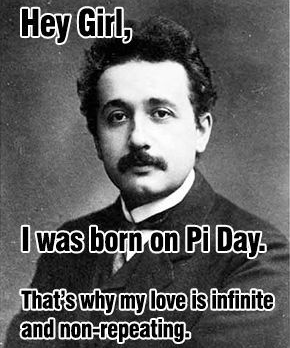
March 14 is also Albert Einstein’s birthday, which can lead to some fun side conversations about scientists, inventions, and how discoveries happen.
Or it might not. Either way, it’s an interesting little connection.
Pi Day Is Just a Tiny Cultural Moment
If your child doesn’t care much about Pi Day...
that’s okay.
If they don’t go to bed saying,
"Wow Mom, that was the best day ever learning about Pi."
...that’s okay too.
Most of the time Pi Day is simply a small cultural moment.
A tiny seed.
A brief encounter with a math idea.
And that’s enough.
No Pressure Required
If you ever find yourself feeling pressure because other families are posting perfect Pi Day photos online, remember:
You don’t need to make your kids participate.
Pi Day is just an option.
You might enjoy parts of it yourself.
Your kids might join in.
Or they might not.
All of those outcomes are completely normal.
Happy Pi Day—and happy unschooling.
Unschooling Resources
More Fun Ideas - Less Work for Mom!