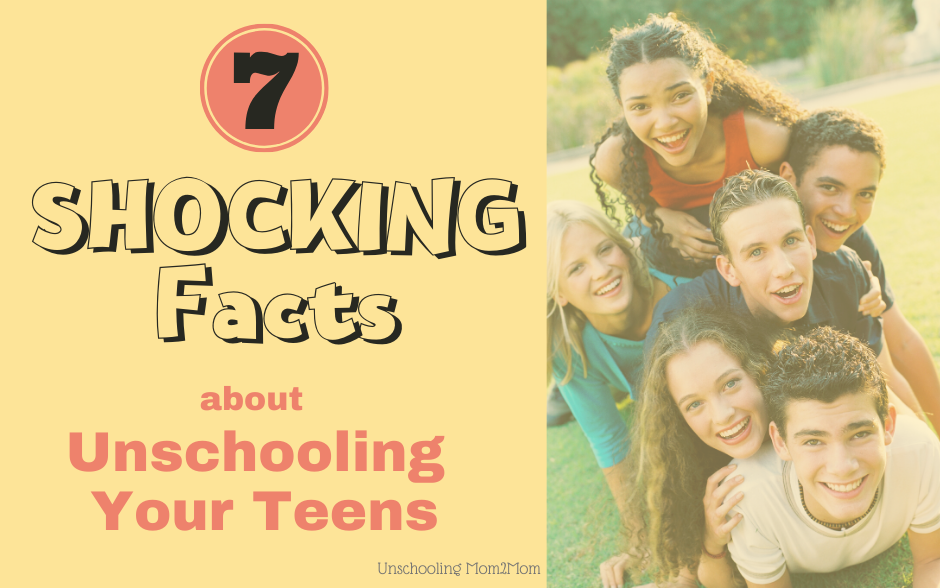
7 Shocking Facts about Unschooling A Teen
If you’re trying to make sense of all this, here are the pieces to keep in mind:
- Unschooling teens can succeed without a traditional high school diploma
- Homeschool transcripts for unschoolers can be created and tailored to real-life learning
- Learning doesn’t stop at 18—teen development continues well into adulthood
- Real-world experiences like internships, travel - LIFE - count as education
- Colleges value self-directed learners with life experience, not just test scores
- Unschooling supports mental health, better sleep, and reduced academic stress
- Teens develop independence, confidence, and decision-making skills through real life
- College is optional—gap years, alternative paths, and career exploration are valid choices
- Socialization in unschooling often leads to more diverse, real-world interactions
I know. Some of these seem like total blasphemy. That’s because we’ve been sold a bill of goods that simply isn’t true. But these are the facts. And now that you know the truth, how much easier can you and your teenager’s life be? Awesome, right?
- DIPLOMAS ARE OVERRATED.
Contrary to popular opinion, you don’t
need a diploma. But if you do, it's easy enough to create one! Same goes for transcripts.
This might interest you: UNSCHOOLING AND TRANSCRIPTS.
- 18 IS NOT A MAGICAL NUMBER.
Have you noticed how everyone starts to shift gears when you’re in your teens? Somehow race has just gotten way more serious? Much of our society thinks that 18 is the “finish line.” As if learning is simply going to stop happening once you reach that big graduation date. It’s such hype. You have an entire lifetime to learn and make choices – and change your mind again! There’s no big rush. Relax. LET'S TALK TEENS
- THE WORLD IS YOUR OYSTER.
Your flexible schedule will allow you to experience some awesome internships and/or travel opportunities. Check out this collection of camps, conferences and adventures for teens:
UNSCHOOLED TEEN OPPORTUNITIES.
- REAL LIFE “COUNTS.”
Instead of trying to force your teen into a particular acceptable mold (usually for college,) do the reverse. Let the mold be created by your teen. Stay with me on this. Life is full of so many chances to learn everything you need to know for adulthood. But if you’re too distracted meeting criteria or completing lessons – you miss all of it! And it’s ten times more intriguing out in the real world. And, if you need a little incentive, colleges love applicants that have explored their interests and simply have more life experience.
Maybe this might help convince you:
EVERYTHING COUNTS
- AVOID SO MANY NEGATIVE ASPECTS!
Homeschooled teens have numerous advantages because of homeschooling. They’ve preserved their natural love of learning. They’ve avoided unnecessary stress. They’ve had the freedom to make choices.They have better socialization and better influences in general.
Read more about all of this in LEARNING FROM THE TEENS.
- GET OFF THE CONVEYOR BELT TO COLLEGE
College is the right path for some kids and their career choices - but not everyone! Society seems to push kids on a passive conveyor belt from high school to college. Wouldn't it be better to explore ALL the options for upper teens and early 20s? It might help parents to look at why they think their kids should just blindly go on to college... the world has changed. Even delaying it a little might allow your teens to know themselves a little better so they can walk with confidence on the path they're choosing. 4 TIPS FOR GETTING OFF THE CONVEYOR BELT
-
FINALLY TIME TO CATCH SOME ZZZZZ’S.
Home educated teens aren’t sleep deprived! Study after study shows how the teen’s need for sleep is being completely overlooked with a typical high school schedule. And we all know how any of us act when we’re over-tired: cranky, more stressed, inhibited creativity, poor memory. How could they possibly be learning much at all?
Read more about TEENS AND SLEEP.
❓ FAQ: Unschooling Teens
Do unschooling teens really not need a diploma?
In most cases, no. Many colleges, employers, and alternative programs accept homeschool transcripts or portfolios. A diploma is often just a formality, not proof of learning.
Video: Diplomas, GED's and Graduations
How do unschoolers create transcripts?
Parents document real-life learning—projects, jobs, volunteering, interests—and translate that into subjects like math, science, or language arts. It’s a shift from tracking assignments to recognizing learning everywhere.
Creating Transcripts
What if my teen wants to go to college later?
That path is still open. Teens can take community college classes, build portfolios, or meet admission requirements in flexible ways when they’re ready.
Unschoolers to College
What if my teen doesn’t seem motivated?
What looks like “lack of motivation” is often burnout or disconnection from imposed learning. When teens have time and space, curiosity tends to resurface—especially with support and exposure to new opportunities.
Lacking Motivation
How do unschooling teens socialize?
They interact with people of all ages through community activities, jobs, online spaces, volunteering, and shared interests—often more reflective of real-world relationships than school-based peer groups.
What about Socialization?
Is it risky to step off the traditional high school → college path?
It can feel that way because it’s unfamiliar. But many families find that stepping off the “conveyor belt” allows teens to make more intentional, informed choices about their future.
4 Tips for Getting off the Conveyor Belt
What about gaps in learning?
Gaps exist in all education models. In unschooling, learning is ongoing and responsive. Teens learn what they need when they need it—often faster and with more relevance.
What about Gaps?
How do parents support unschooling teens without pushing?
By staying engaged: asking questions, offering resources, noticing interests, and helping them explore options—without turning those into requirements.
What if I’m afraid I’m not doing enough?
That fear is common. It usually comes from school-based expectations. Shifting your focus to connection, curiosity, and real-life engagement helps reframe what “enough” actually looks like.
Can unschooling really prepare teens for adulthood?
Yes—because adulthood isn’t about completing assignments. It’s about problem-solving, communication, adaptability, and self-direction—all of which are practiced daily in an unschooling environment.
Grown Unschoolers
Where can I get a little support with this?
If you’re looking for a place to talk this through, ask questions,
and hear how other families are navigating the teen years,
the Creating Confidence Community might be a good fit.
You don’t have to do this alone.