How Do Unschooling Parents Make Plans?

One of the questions unschooling parents ask all the time is:
“But how do you plan anything?”
Most of us were trained to believe planning means lesson plans, subjects, and assignments.
So when you remove curriculum, it can feel like you’ve removed the roadmap too.
But unschooling planning isn’t about deciding what your child must learn next.
It’s about shaping a life where curiosity has room to grow.
Planning as an Unschooling Parent (Without Turning Into a Teacher)
One of the biggest questions parents ask when they move toward unschooling is - and something we talk about regularly in my membership community:
“If we don’t use curriculum... how do we plan anything?”
It’s a fair question. Most of us were trained to believe planning means:
- lesson plans
- subjects
- assignments
- measurable outcomes
-
But unschooling planning looks very different.
You’re not planning what your child must learn.
You’re planning an environment where learning can happen easily.
So this week we're talking abut planning as unschoolers.
I want to help you get 3 practical tools or techiques—and some explanation about why this all matters.
Start With the Week Ahead
Instead of planning school, look at the actual rhythm of your family’s week.
What’s already on the schedule? What are the "have-to's"
- appointments
- sports practices
- errands
- visiting friends
- library day
- quiet time at home
Those things matter. They shape the energy of the week.
Sometimes the most useful “planning” moment is simply standing at the calendar and saying:
“Let’s look at the week ahead.”
You might ask simple questions like:
- Is this a busy week or a slower one?
- Are there days we’ll mostly be home?
- Is there anything fun we want to add?
This keeps planning grounded in real life, not imaginary school schedules.
Hello!
If you're new to the Unschooling Mom2Mom Podcast, welcome to our 6th season!
I'm your host, Sue Patterson. The real person behind all things Unshooling Mom2Mom...
I'm coming here weekly to offer you short little bits of encouragement. A ten-minute peptalk. And usually a few resources to help you dive deeper - because we can't really undo all the conditioning we've grown up with in 10 minutes a week.
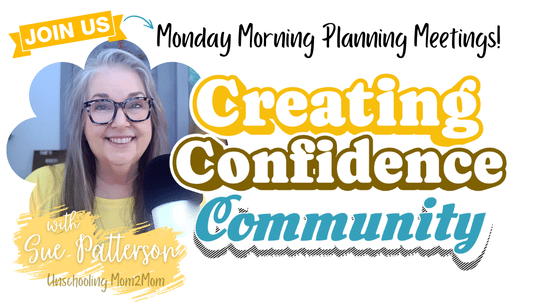
Before we dive into today's topic, I do want to let anyone listening who is feeling really alone, I have a private memberhip community you can be part of. Multiple calls a week, a private portal filled with information that can help - plus the Creating Confidence Daily app where I'm recording DAILY voicenotes. Guidance and reassurance.
You have 2 main ways to get support from me - the membership community - where you get everyone else too to help you brainstorm for solutions and the Daily App. Here's the link:
Think in Terms of Possibilities, Not Requirements
Unschooling planning is mostly about gathering possibilities.
Maybe you notice:
- a new documentary that looks interesting
- a museum exhibit nearby
- a recipe someone wants to try
- a game the kids might enjoy
- a book that connects to a curiosity
You don’t assign these things.
You put them within reach.
Some families call this strewing.
Others just call it leaving interesting things around.
The key difference from school planning is this:
You are not planning what must happen.
You’re preparing what could happen.
Plan for Connection
Another overlooked part of unschooling planning is relationship time.
You might think about:
- watching a show together
- cooking together
- driving somewhere interesting
- starting a conversation about something you noticed
These small moments often become the doorway to learning - or at least the doorway to the parents knowing more about how the child is thinking or viewing various situations.
Kids ask questions when they feel relaxed and connected—not when they feel managed.
Maybe You Can Relate...
A lot of parents who used to homeschool in more traditional ways tell me they miss the time they spent doing lessons together. They remember that kitchen-table time as connection.
But if we’re honest, the kids probably didn’t experience it that way.
For many of them, it was simply the thing they had to get through before they could go do what they actually wanted to do.
So when families move toward unschooling and that side-by-side lesson time disappears, it can feel like something important was lost. But what’s really happening is that the old routine that looked like connection is gone.
Real connection usually feels different. It’s the difference between doing something you both enjoy… and someone tolerating the lesson plan because they really have no choice.
When we’re not relying on school routines anymore, we have to become a little more creative about noticing those moments that actually feel good for both people. That’s where the real connection starts to show up.
Pay Attention to the Season You’re In
Every family has different seasons.
Some weeks feel expansive:
- lots of energy
- new projects
- new places
Other weeks feel quieter:
- everyone is tired
- people want more downtime
- the house feels like the right place to stay
Sometimes, when you're standing in front of that calendar, you can notice that you need to sprinkle in a stay-at-home day after a few busy ones.... or vice versa. It's a rhythm that may vary within the week and CERTAINLY varies with what family members need.
Planning in unschooling often means
respecting those shifts instead of pushing through them.
Notice What’s Already Working
A simple weekly review can help you plan naturally.
Ask yourself:
- What sparked curiosity this week?
- What did the kids spend the most time doing?
- Did anything feel rushed or stressful?
This isn’t about evaluation.
It’s about noticing patterns so you can
support what’s already unfolding.
The Real Goal of Planning
Planning as an unschooling parent isn’t about controlling learning.
It’s about removing friction.
Making it easier for curiosity to show up.
Making it easier for conversations to happen.
Making it easier for interesting things to cross your family’s path.
When you do that consistently, learning starts to appear everywhere.
And eventually you realize something important:
You’re not planning school.
You’re building a life where learning naturally fits.
3 Simple Planning Tools Unschooling Parents Use
The
“Look at the Week”
Conversation
1. The "Look at the Week" Conversation
This is the simplest planning tool—and often the most useful.
Instead of creating a schedule, you just look at the week ahead together.
Stand near the calendar and notice what’s already there:
- sports practice
- appointments
- library day
- visiting friends
- errands
Then you might say something like:
“Looks like Tuesday is busy. Maybe Monday's a stay home day - Minecraft Day!
Or:
“We’re already going near the library Wednesday. Want to stop in?”
This kind of planning helps kids begin to think about their time without feeling managed.
It also helps everyone
see how learning fits naturally into life.
The
“Idea Parking Lot”
2. The "Idea Parking Lot."
Unschooling parents collect ideas all the time.
I listed some earlier but maybe this week has:
- a local event or festival coming up
- a kit, or craft project you spotted
- a park, trail, or place in town you haven’t explored yet
- weird historical story you ran across
- A YouTube channel someone recommended
- a podcast or a show that you heard about that seems like something your te
Instead of assigning these things, just
keep a place where ideas live.
Some families use:
- a whiteboard
- a shared note on their phone
- a sticky note wall
- a page in a notebook
Kids can glance at it when they’re bored or curious.
Nothing is required.
It’s simply a menu of possibilities.
The Weekly
“Just Data”
Review
3. The Weekly "Just Data" Review
This one helps parents avoid falling into the “Are we doing enough?” spiral.
Once a week, take a minute to look back.
Ask yourself:
- What sparked curiosity this week?
- What did the kids spend a lot of time doing?
- Did anything feel rushed or stressful?
Maybe you realize:
- afternoons work better for outings
- mornings are better for quiet time
- the kids are really deep into a particular interest
Those observations naturally shape how the next week unfolds.
You’re not making big decisions about what you see.
You’re simply noticing patterns.
What Planning Really Means in Unschooling
Over time, unschooling planning becomes less about creating structure and more about noticing patterns.
You begin to see:
- where curiosity shows up
- what environments help your kids thrive
- what rhythms make the week feel smoother
Instead of pushing learning, you start supporting the learning that’s already happening.
And that’s when planning starts to feel less like work... and more like paying attention.
A Different Kind of Planning
Planning in an unschooling home doesn’t mean mapping out everything your child will learn.
It means paying attention.
Paying attention to your child.
To what sparks their curiosity.
To the rhythm of your family’s life.
Some weeks will feel full of activity.
Other weeks will feel slower.
Both are normal.
Over time you begin to notice something surprising: learning doesn’t need nearly as much management as we were taught.
When kids live in an environment filled with conversation, interesting ideas, real-world experiences, and supportive adults, learning shows up everywhere.
And eventually the question shifts from:
“How do I plan school?”
to something much simpler:
“What kind of life do we want to build together this week?”
Keep Unschooling Front of Mind
When the world around you keeps pushing the old status quo, you need gentle reminders and a steady stream of ideas.
These two resources were created to support unschooling families in everyday life - check out the free 7-day trials!
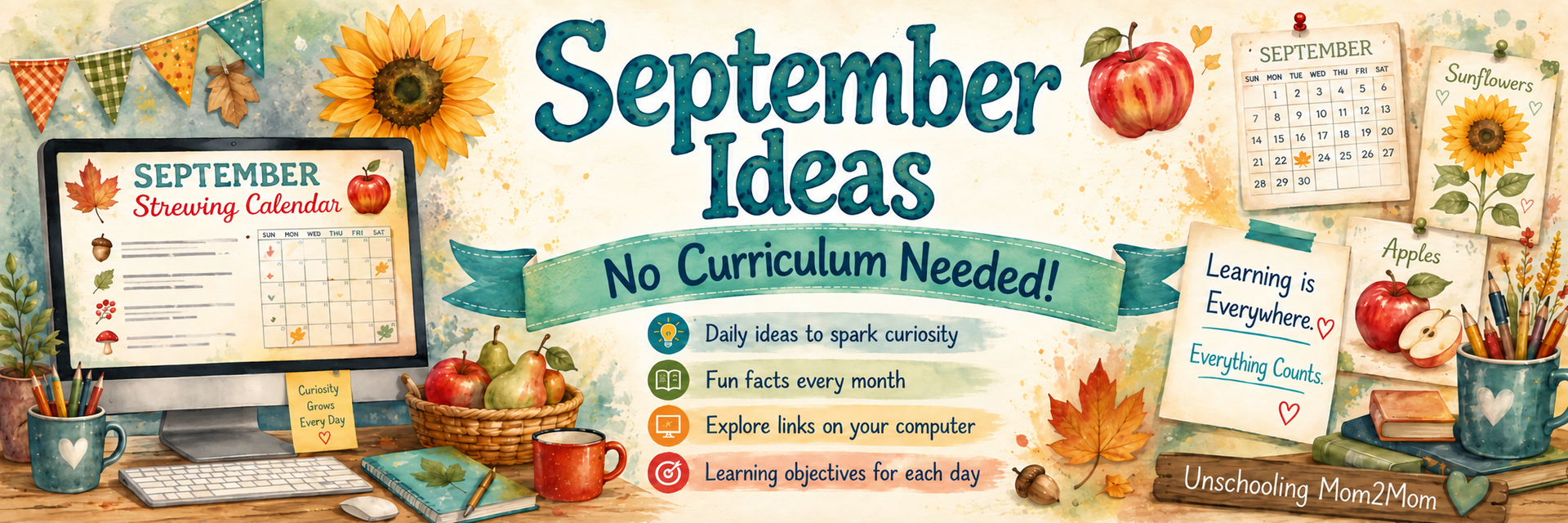
Strewing Calendar
A simple way to keep interesting ideas circulating in your home. A downloadable printable calendar along with daily prompts, seasonal ideas, and conversation starters that help curiosity show up naturally—without turning it into lesson plans.
See what you think:
Creating Confidence
Daily encouragement and community support to help you stay grounded in your unschooling mindset.
Short daily nudges help interrupt those “Am I doing enough?” thoughts and replace them with calm perspective and practical reassurance.
Let's get you more unschooling support!