Creative Whiteboard Ideas for Everyday Unschooling
The Unsung Hero of Unschooling: The Whiteboard
Whiteboards are one of my favorite unschooling tools — simple, flexible, and endlessly reusable. You don’t have to turn them into a rigid planner; think of them as
creativity surfaces that shift as your family’s days unfold.
✏️ 1. For New or Reluctant Readers
Keep a whiteboard near where your child hangs out and let them write
words they already know — words like “exit,” “subscribe,” “hot,” “cold,” names of family members, etc. Or if writing isn't their thing, you can write the words for them. You’ll see their confidence bloom as their
word wall grows. Over time, they’ll start spotting those same words everywhere — in books, games, signs — and realize how much they can already read!
Be enthusiastic:
"OOOH! You know that word? Let's add that it to the Whiteboard!"
💡 2. The “Idea Wall”
When someone says,
“We should go there!” or
“Let’s try that next week,” add it to the
Idea Wall.
No one’s suggestion gets lost, and everyone feels heard. You can glance back later when you’re planning your week or deciding on an outing — instant validation that everyone’s ideas matter and adventures are waiting!
🗓️ 3. Strewing Calendar Fun Facts
Is it
Talk Like a Pirate Day? International Dolphin Day? Maybe
National Pizza Day?
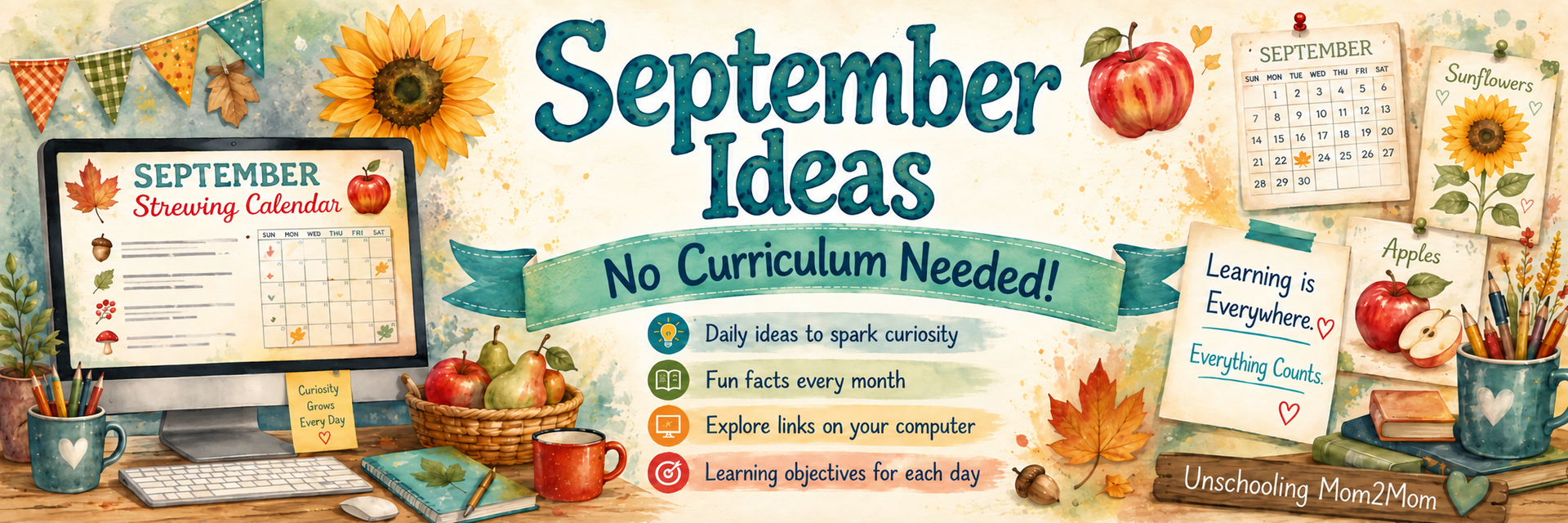
Write it on the whiteboard with a couple of random facts — and let it spark curiosity. What do dolphins dream about? Where did pirates really bury treasure? What toppings make the perfect pizza? Suddenly, everyday trivia turns into organic learning (and dinner inspiration). If you need Strewing Calendar Ideas, I've got a great tool for you!
Whiteboards can become living,
breathing reminders of curiosity and connection
— not To-Do lists, but To-Notice lists.
Easy and Fun!
15 More Whiteboard Ideas
🧠 Idea Generation & Creativity Boosters
- Word Storms:
Start with one word (like “adventure” or “water”) and branch off into every connected word or idea that comes to mind. Pick a word for the day - look around for easy inspiration! How about something connected to Autumn? - What If...Wall:
Write prompts like “What if people could live underwater?” or “What if our house was upside down and we walked on the ceilings?” What funny descriptions would these ideas prompt? Record their ideas! - Create Mind Maps:
Choose a topic (like space, music, friendship, October) and draw connecting lines outward for related thoughts, questions, or interests. - Random Object Challenge:
Pick three random words or objects (e.g., banana, clock, cloud) and brainstorm how they could fit together in a story, invention, or skit. Come together at lunch to tell the story you made up. - Curiosity Corner:
A section for “Things I Wonder...” where everyone can add questions that pop up during the week.
🎨 Collaborative & Visual Play
- Doodle Relay:
One person draws a random shape; the next person turns it into something recognizable. Keep adding layers! - Color-Code Categories:
Use different colors for ideas, questions, resources, and next steps — makes the chaos feel organized.
Or use each person in the family gets their own color of pen! (Pro tip: keep back-ups!) - Inspiration Board:
Paste or tape printed words, doodles, or magazine cutouts alongside whiteboard writing for a mixed-media brainstorming collage. Start with a theme or see what they come up with!
💬 Decision Making & Planning
- Pros/Cons Grid:
Divide the board into two columns to brainstorm options for a big choice (like family trip ideas or project themes). - Goal Ladder:
Write a dream at the top (“Start a YouTube channel”) and work downward with steps to get there. - Weekly Wonder Plan:
At the start of each week, jot everyone’s ideas for what they’d like to explore, make, or learn.
🔄 Reflection & Connection
- “We Tried...” Wall:
Record experiments, recipes, art techniques, or activities you tried — and note what you’d tweak next time.
Or divide into 2 columns: 👍 Thumbs up - "that was fun!" or 👎 Thumbs Down - "let's never do THAT again!" - Gratitude Grid:
Leave space to jot quick moments of appreciation — big or small — from your week. Did someone do something kind for you? Perfect place to give a shout out! - “Spark Tracker”
Note ideas that really caught someone’s curiosity this week. Use them later for deeper projects. - Riddles
Perfect for new readers! Can they guess it? Put a new one up every day!
No Handy Whiteboard?
Maybe you have sliding glass door? Most likely you have a window!
Grab a few water-based pens and *ta-da* you've created your own "whiteboard!"