What to Say When Kids Feel Behind
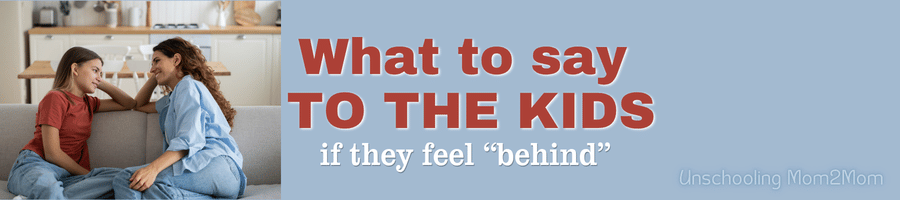
What to Say When Your Child Feels Behind (Unschooling Conversations That Actually Help)
It usually catches you off guard.
You’re in the middle of a normal day, and your child says something like:
“I think I’m behind.”
Or:
“My friends are doing more than me.”
Sometimes it’s direct. Sometimes it’s quieter. A comment about school, a question about grade levels, or just a shift in how they’re talking about themselves.
And in that moment, it can feel like everything you’ve been holding steady suddenly gets pulled into question.
Why This Moment Feels So Big
When your child says they feel behind, it lands differently than your own doubts. Because now it’s not just something you’re sorting through internally. They’re trying to make sense of it too.
And it can feel like you need to respond in exactly the right way.
Something reassuring, but also honest. Something that helps, without dismissing what they’re feeling.
That pressure can make the moment feel heavier than it needs to be.
What Your Child Is Actually Asking
Even though the words are about being “behind,” that’s not usually the full question.
They’re trying to figure out where they fit. They’re noticing differences and trying to understand what those differences mean. Often it's happening as they are approaching teen years and is the natural progression from a growth and developmental standpoint.
They're thinking:
- Am I okay?
- Am I doing enough?
- Am I missing something important?
- Will I really be ok?
Those are the questions underneath. And they don’t get answered through comparison.
How to Stay Grounded in the Conversation
The most helpful responses tend to come from staying connected to what you already see.
Instead of talking about what other kids are doing or the timeline of what's typically happening in a school, should be happening.
What’s actually true about your child.
You might talk about:
- the things they spend time on and why they matter
- what they’ve learned recently, even if it didn’t look like school
- how different paths can look and still lead somewhere meaningful
These aren’t big speeches.
They’re small, steady reminders that help your child see themselves more clearly.
What Doesn’t Usually Help
It’s tempting to try to fix the feeling quickly.
To reassure them by comparing them to others, or by explaining why they’re not behind.
But most kids can feel when something is being smoothed over.
They don’t need a perfect answer.
They need something that feels real.
Let the Conversation Be Ongoing
This isn’t a one-time conversation.
It tends to come up in different ways over time, especially as your child hears more about school from friends or family.
That’s normal.
Each time it comes up, you’re building a little more clarity together.
When It Feels Hard for You, Too
These moments can stir up your own doubts.
You might feel that pull to prove something or show that everything is working. Understandably, parents often want to give an answer that settles it for both of you.
But that's also where your own confidence matters.
If you’re already feeling unsure, it’s harder to stay grounded in the conversation.
That’s why so many of these moments connect back to the same underlying question: how to trust what you’re seeing.
If that’s something you’ve been working through, this post on
Do Unschoolers Fall Behind? What “Behind” Actually Means helps put that fear into context.
When You Don’t Feel Steady Either
These moments don’t just affect your child. They tend to stir up your own questions at the same time. You might feel that pull to say the “right” thing, trying to make it all make sense. We desperately want to give an answer that settles it for both of you.
And if you’re already feeling unsure, that can be hard to do in the moment.
This is where support makes a real difference.
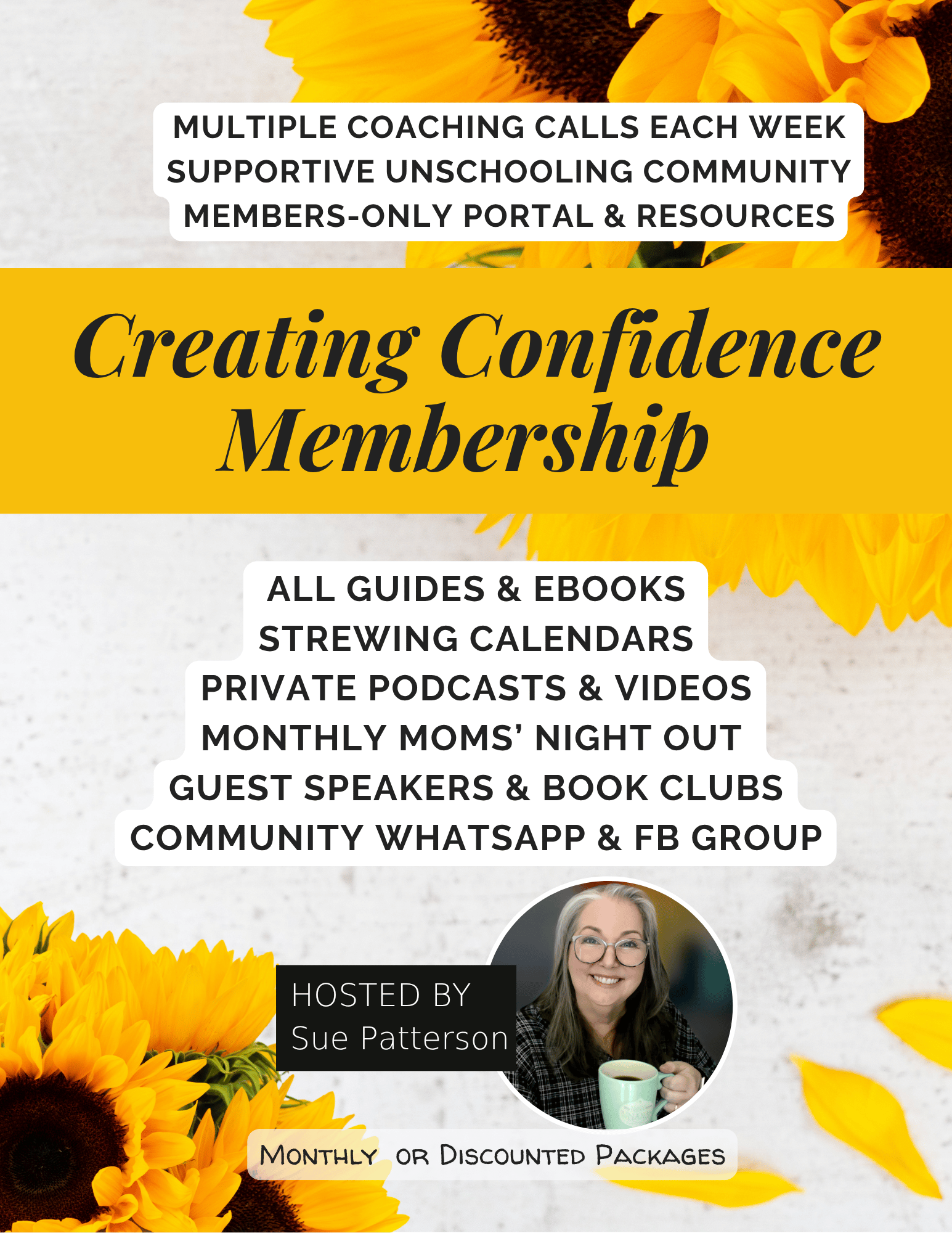
Inside the Creating Confidence Community, these are the kinds of conversations we have all the time.
- Real situations
- Real questions
- Space to talk through what’s actually coming up without defaulting back to comparison or pressure.
You don’t have to figure out the right response on your own.
You Don’t Have to Get It Perfect
If your child says they feel behind, you don’t need to fix it in one conversation.
You don’t need to have the perfect words.
What matters more is that they feel heard, and that over time, they start to see themselves through something other than comparison.
That takes repetition.
And it gets easier the more grounded you feel in what you’re already seeing.
Questions About Kids Feeling Behind in Unschooling
→ What should I say if my child thinks they’re behind?
Start by listening. Let them explain what they’re noticing and how it feels. Then gently bring the focus back to what’s true in their own experience, rather than comparing them to others.
→ Is it normal for kids to feel behind in unschooling?
Yes, especially as they become more aware of how school works for other kids. These moments are often about comparison, not actual gaps in learning.
→ Should I compare them to other kids to reassure them?
That usually doesn’t help long-term. It can reinforce the idea that comparison is the way to measure progress, which is often what’s creating the discomfort in the first place.
→ What if I don’t feel confident answering them?
That’s very common. These conversations are easier when you feel steady in your own understanding. Building that confidence over time helps you respond in a way that feels more natural.
→ Will this feeling go away over time?
It often becomes less intense as your child gains more clarity about their own path and experiences more success in areas that matter to them. The more life experience they have under their belt, so to speak, will show them that they are, in fact, well prepared for adulthood.