The Side Effects of Standardized Testing

Few people consider standardized tests to be the powerful teaching instruments they are, nor do parents consider the possible impact of tests on their children. Most homeschoolers who have their children tested find the tests to be merely a source of academic feedback or a simple way to notify the state that the children are being educated according to their standards.
Years ago I administered standardized tests to the students in my public school classrooms. As a homeschooling parent, I have agonized over whether to test my own children. Now I regularly administer achievement tests to homeschooled students. I continue to notice that standardized tests often teach significant lessons.
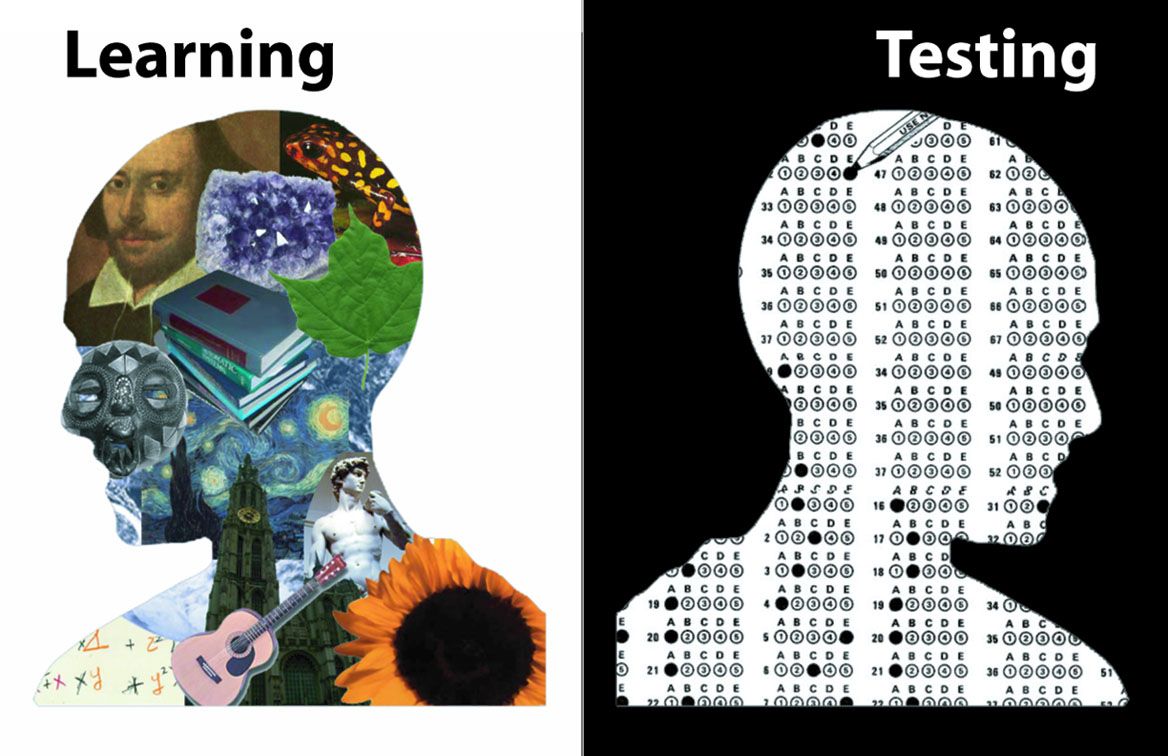
Please consider the "side effect lessons" listed below. Parents may want to consider how to best counter these potentially harmful lessons the next time their children are tested.
Side Effect Lessons
- Someone else knows
what you should know better than you do.
- Learning is an absolute that can be measured.
- Your interests are not important.
- If you score very well, you are better than other people who do not score as well.
- I haven't learned to read yet. I am not smart.
- The test was too hard. I am not smart.
- The test was easy. I don't have to learn any more.
- Poor test scores mean that you are a failure. If you score poorly, there is nothing you can do to change it. Why try?
- The test was easy [hard]. Public [home] [private] school kids are dumber [smarter] than I am.
- Thinking is not valued; getting the 'right' answer is the only goal.
- The purpose of learning is to get a high score. High test scores are the only purpose of testing.
- The answer (to any question) is readily available, indisputable, and it's one of these four or five answers here; there's no need to look deeper or dwell on the question.
- Since we are tested once a year so we can homeschool, we have to spend the rest of the year preparing for the test.
- The subject areas being evaluated on the test are the only things that are important to know.
- The questions on the test are what is important. What I have been studying is not important.
- I have to get a higher score next year to show that I am learning.
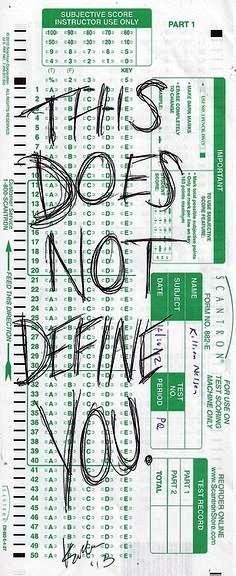
- Your worth can be summarized by a single mark on a paper.
Other professional educators share my concerns about achievement testing. A few years ago, I spent an afternoon in the Multnomah County Library in Portland searching through education journals, reading articles on testing and evaluation. Here are the notes I gleaned that day.
- The single most common misuse of any test score is as a sole evaluation tool, contrary to test makers' recommendations.
- Tests do not measure what they are said to measure.
- Standardized tests cannot measure creativity.
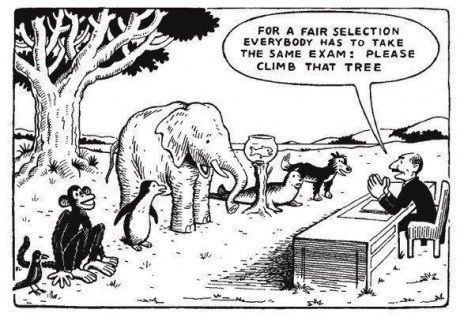
- Test scores reward children who have one style of learning, and penalize all other children for having a different style of learning.
- Standardized tests cannot measure the ability to think, and actually teach children bad thinking habits, such as trying to outguess the test makers, rather than thinking for themselves.
- Standardized tests result in a type of evaluation that is easy to manage (true/false, multiple choice). Thinking skills are very difficult and time consuming to evaluate.
- Standardized tests are designed, not to test individual progress, but to compare a child's progress to the progress of other children. Thus, tests promote competition, not cooperation.
- Poor test scores decrease self esteem, possibly leading to social and discipline problems.
- Testing can damage the trust relationship between teacher and student.
- Test scores and grading are a divisive force in families, separating parents from their natural position as the child's first and most committed teacher. (Wow! Some educators know this! Dare I hope for a positive future?)
- Reliance on standardized test scores reduces initiative, independence, creativity, and willingness to take risks in learning situations.
- Test scores become the goal of student work (extrinsic reward)rather than the sense of satisfaction and wonder that naturally follows discovery of something new (intrinsic reward).
- The drive for high test scores creates unnecessary, unproductive stress.
- Standardized tests promote under achievement.
- Test makers assume that all children have equal readiness for all subjects at the same age.
- Tests focus on a narrow band of learning, emphasizing memorization skills.
- Reliance on test scores and grades causes students to drop courses of study.
It is worth noting that standardized tests, in addition to being narrowly focused and frequently misused comparative measurements of academic progress, are powerful teachers in their own right. Only when these instruments have been imposed on huge populations of students for many years can we begin to see that the tests take on a teaching life of their own, quite apart from the intentions of their creators.
This article by Ann Lahrson-Fisher was included in her book "Fundamentals of Homeschooling: Notes on Successful Family Living." It was originally published by the National Home Education Network.
Need More Help with This?
Some states/countries require testing at various stages of your child’s education.
Sometimes parents feel like they want to use a standardized test to see how their child is doing.
This Unschooling Guide shares a collection of articles and information to help you with this topic – from an unschooling perspective.
Like...
- Overcoming Questions about NOT Testing, like:
- How will your kids ever learn to do it?
- How will you know what they’ve learned?
- What about accountability?
- What about teens, college, SAT/ACT tests?
- How do unschoolers make sure they “hit all the subjects?”
- The Parent side of test-taking
- Which states test and what to do if you have to?
- Articles and resources – a big reading list for you!
- Humor

Remember, when you’re afraid of something, shine some light on it!
That’s what this Guide will help you do!
Read More about Testing...

Memes about Testing