Unschooling vs Homeschooling: Why It Feels So Different Day to Day
If you’re comparing unschooling with homeschooling, the biggest differences often show up in daily life, family dynamics, and how learning is approached. Traditional homeschooling usually follows curriculum, lesson plans, and grade-level expectations, while unschooling centers learning around a child’s interests, curiosity, and real-life experiences. For many families, that shift changes not only how learning happens, but also how much pressure, burnout, and conflict show up in the day-to-day experience of home education.
If you’ve moved from homeschooling into unschooling, or you’re thinking about it, you’ve probably felt the shift almost immediately.
The rhythm of the day changes.
The pressure changes.
The way learning shows up changes.
Not just in what your child is doing, but in how the whole day moves.
There’s often less directing and fewer forced transitions. It's hard, initially, to identify any structure, but there's more space for real life to unfold naturally.
And depending on the day, that can feel deeply freeing... or deeply unsettling.
Where the Difference Shows Up First
Most homeschooling approaches still organize the day around learning goals.
Even when they’re flexible or relaxed, there’s usually some version of:
- subjects to cover
- skills to work on
- a sense of what the day is “for”
That creates a shape to the day. You know where you’re going, even if you adjust along the way.
Unschooling shifts that starting point. The day isn’t built around what needs to be taught. It’s built around what’s happening in real life.
Why Unschooling Can Feel So Open-Ended
When you step away from a plan, you also step away from the structure that made the day feel predictable. That’s usually where the discomfort shows up. The day can feel wide open. It’s not always obvious what matters, what counts as progress, or whether anything important is happening.
This is the same moment where many parents start wondering if the day is “enough.” If that question is sitting in the background, it helps to see it broken down more clearly in Is This Enough? What Unschooling Actually Looks Like Day to Day.
How Learning Feels Different
In a more traditional homeschool setup, learning is often easier to recognize. There are clear starting points and stopping points. You can see when something is introduced, practiced, and completed.
In unschooling, learning tends to stretch across the day.
It shows up in conversations, interests, repeated experiences, and things your child returns to over time. It doesn’t always have a clear beginning or end.
That can make it feel less solid at first, even when your child is deeply engaged.
Why It Can Feel Like You’re Doing Less
This is another place where the difference becomes more noticeable.
When you’re not planning lessons or directing the day, your role shifts.
You’re still involved. You’re still paying attention. You’re still supporting what’s happening.
But it can feel quieter or even less visible.
And sometimes that gets interpreted as “doing less,” even when your involvement is just showing up in a different way.
If that feeling has come up for you, it’s something a lot of parents work through.
This post on
Why Unschooling Feels Like You’re Doing Nothing (And Why That’s So Hard to Trust) goes deeper into that shift.
The Question of Progress
Homeschooling often comes with a clearer sense of progression. You can see what’s been covered and what’s next.
In unschooling, progress tends to show up in patterns.
You might notice:
- deeper interest in certain topics
- more independence in how your child approaches things
- stronger communication or problem-solving over time
It’s still progress. It just doesn’t follow a preset sequence.
Why So Many Parents Feel Burned Out With Traditional Homeschooling
One of the things that often surprises parents is how much pressure disappears when they stop trying to manage every part of the learning process.
In many homeschool approaches, parents are responsible for planning lessons, following curriculum, keeping pace with grade-level expectations, and making sure certain topics are covered on schedule.
That can become exhausting over time and homeschooling burnout is common.
Curriculum is usually built around a standardized scope and sequence, which means subjects are introduced according to an external timeline rather than a child’s actual interest or readiness. Sometimes that lines up naturally. Often it doesn’t.
When a child is deeply interested in one thing but expected to focus on something else entirely, frustration can build on both sides. Parents feel pressure to keep things moving. Children resist what feels disconnected from where they already are.
That’s where power struggles often start to emerge.
Unschooling shifts the starting point. Instead of building the day around what needs to be covered, learning begins with the learner themselves — their interests, questions, energy, timing, and engagement.
From there, the learning expands outward.
For many families, that changes the relationship dynamic completely. It becomes less about managing compliance and more about working in partnership. Not because there’s never tension, but because the learning process is no longer built around constant external pressure.
Where Structure Fits In
One of the biggest misconceptions is that unschooling has no structure.
In reality, it has a different kind of structure.
It grows out of:
- your family’s rhythms
- shared routines
- the way your days naturally unfold
That structure isn’t always obvious at first, which is why the days can feel so different.
It becomes easier to see over time, especially when you start paying attention to what’s already consistent.
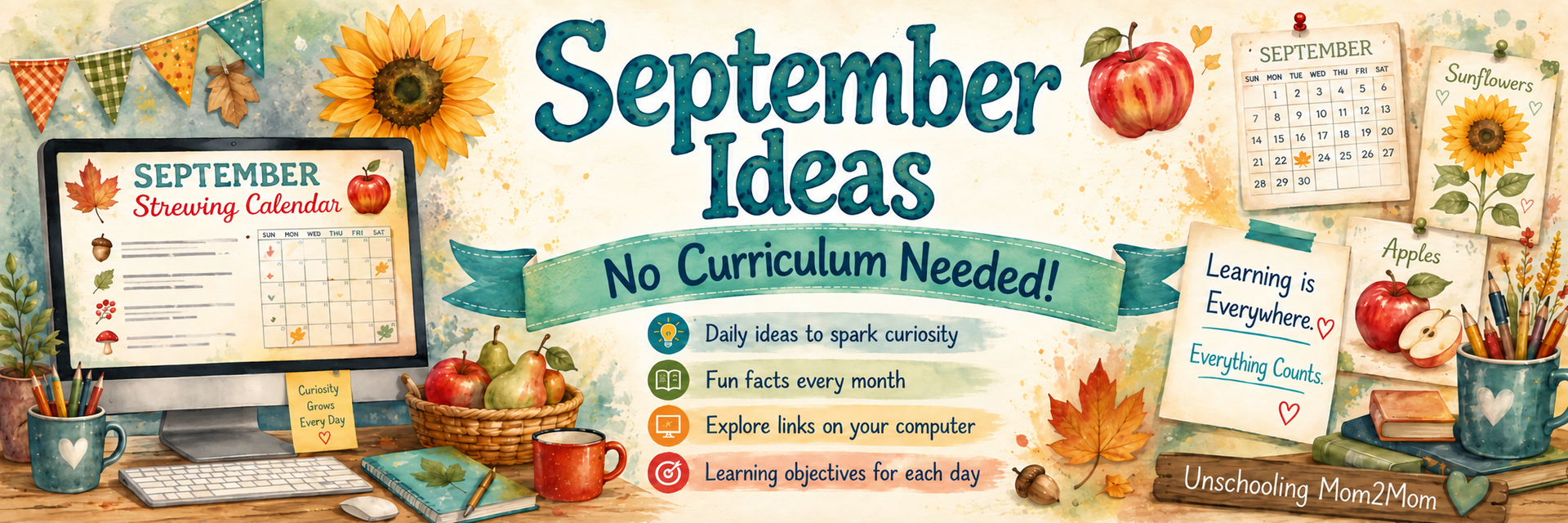
That’s what we’re focusing on this month inside Creating Confidence Daily. Not adding more structure, but helping you recognize and build on what’s already there so the day feels more grounded.
It’s Not Just a Different Method
This is why the shift from homeschooling to unschooling can feel bigger than expected.
It’s not just a change in how you teach. It’s a change in how you
think
about learning.
You see what counts or what matters differently.
Measuring progress looks different too.
That’s why it takes time to settle into.
You’ll Feel the Difference Before You Fully Understand It
Most families notice the difference in their days before they can fully explain it.
The structure feels looser. The expectations feel different. The pace changes.
And over time, as you start to see how learning is actually showing up, that difference begins to make more sense.
The day doesn't become more structured in the traditional way.
But you start to recognize what’s already there.
Questions About Unschooling vs Homeschooling
→ What is the main difference between unschooling and homeschooling?
Homeschooling usually follows a planned approach to learning, often with curriculum or specific goals, following familiar school patterns for educating.
Unschooling is more responsive to a child’s interests and real-life experiences, with learning happening as part of daily life. It's more aligned with how adult learn naturally outside a school setting.
→ Do unschoolers follow a schedule like homeschoolers?
Some unschooling families have rhythms or routines, but they’re usually more flexible. The day isn’t divided into subjects or set learning blocks in the same way.
→ Is unschooling less structured than homeschooling?
It can feel that way at first because the structure isn’t always obvious. Over time, many families notice consistent patterns and rhythms that provide a different kind of stability.
→ Which is better, unschooling or homeschooling?
That depends on what fits your family. Some families prefer a more guided approach, while others feel more aligned with a flexible, interest-led way of learning.
Many families actually begin with traditional homeschooling because it feels more familiar. Leaving the school system is already a big shift, and changing the way you think about learning itself can take even longer. Over time, some parents begin noticing that learning is still happening without as much structure as they originally thought they needed.
As Sue often says, “Where you start is not where you will end. Stay flexible. Continue to see what works for you and your kids and move in that direction.”
→ Can you switch from homeschooling to unschooling?
Yes, many families transition gradually over time. It often involves adjusting expectations and learning to recognize education outside of curriculum, assignments, or grade-level timelines.
For many parents, the shift happens as they begin questioning whether certain subjects or lessons truly need to happen on a fixed schedule. Instead of asking, “How do we keep up?” the question becomes, “Does this make sense for us right now?” or “Could they learn this later, when they’re actually interested?”
That shift in perspective is often what changes the day-to-day experience most.