How Do Unschoolers Learn to Spell?

Are you noticing a lot of spelling mistakes from your child? Maybe you're thinking you may have to stop unschooling, because it's not working! Maybe you're asking, How DO unschoolers learn to spell???
Podcast Transcript
Sometimes parents worry when they see a lot of misspelled words from their child - especially as they start to get older. It’s important to remember that they're in the process of learning what they need.
You don't get to see what is happening in their brains...
Maybe spelling isn't what they're focusing on.
Maybe it's something else.
Or maybe they ARE focusing on it, and it's still developing.
You CAN continue with an unschooling approach - even for spelling!
I'm Sue Patterson. And this is the Unschooling Mom2Mom Podcast.
I’ll leave links to unschooling resources in the show notes - a course to help you strengthen your foundation, a membership group that gives you the support you need, 1:1 coaching as well as PDF Guides based on all the various fears that keep us from embracing unschooling.
Lots of resources to help you on your unschooling journey!

So this week… it’s spelling.
I get it that people read an email with misspellings, and automatically assume that the person isn’t that smart. But that isn’t really true. They’re just not a good speller. Or their autocorrect is wrong. Or they’re just not worrying about the spelling aspect. But, as parents, we want our kids to come across in the best possible light. I get that. We want it for them. And.. we want it for us. Because what does that bad speller reflect? That you’re “not doing your job?” We have to pull our ego out of it, and come at this from the learner’s perspective.
Are doors closing because they misspell something in a text?
Who’s problem is this, really?
And maybe this is a good time to invite you to join my membership group. So many of the issues we face when we start unschooling have to do with undoing ideas we have in our own heads. And doing this kind of internal work with others on this same journey - and me right in there brainstorming suggestions too - it has helped sooo many parents. Maybe it’s time for you to join us over there! If you go to www.Suepatterson.com/membership you’ll find the details of all the benefits, testimonials from other parents, and how to sign up!

But if you’re concerned about spelling, I have a few points I want you to ponder and then some suggestions.
And… if you want to stay to the end, I’ll share a little about my oldest’s journey in spelling.
Ideas to Think About...
- Shift your focus to what they're trying to convey to you. Do they care about the spelling? Don't stop the connection that's occurring between you because you're focusing on their spelling. They'll stop caring about the connection if that's where you go with this.
- Think about why you care so much about their spelling. Are you worried they will be considered "dumb?" Is it bothering them or you? You can always proof for them, as their mental spelling list improves.
- Are you worried you will be judged for not "teaching them?" Sometimes we get caught up in all that. Practice saying, "they're working on it." or adding the word "yet" to the thought about how they can't do/spell something.
- Rote memorization doesn't work. It may in the short run, but it is quickly forgotten - because it's not in context or relevant for the learner. Don't waste the time or the power struggle over this!
Tips for Spelling Development
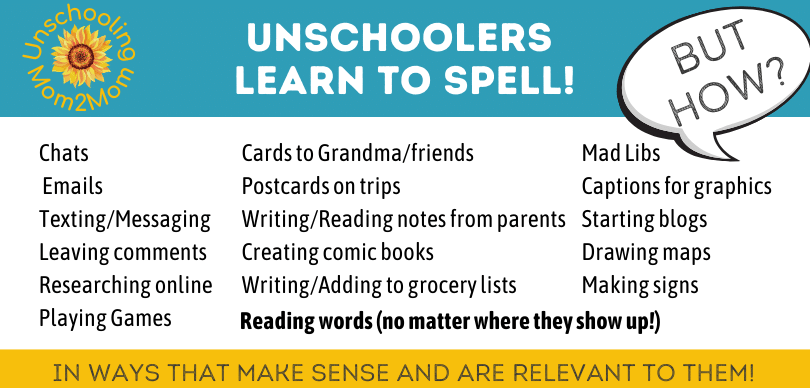
✔︎ Use good spelling when you text or write to them. Don't use "text speak". The more they SEE the correct spelling, the better they'll get.
✔︎ If they're worried they can't spell, get a big white board and write down all the words that they DO know. I'll be they can spell words like Stop/Go Hot/Cold On/Off and these will expand into EXIT, Mom, Dad, Their own name... keep moving in the direction of what they DO know how to spell. Having it up on the white board helps remind them.
✔︎ Another version of my white board idea is to put the words on paper that they ask about often. Maybe it's words that come up in a Minecraft chat or something else with friends. Help them have easy access to SEE the correct spelling, so they can copy it when they need it.
✔︎ Offer to proof for them, if they are sharing their writing with others.
✔︎ Play with words. Notice them out loud. Keep it light. Minimize stress around spelling.
✔︎ Play games like Boggle, Scrabble, BananaGrams, Words with Friends, Crossword puzzles & Word Searches
I can’t tell you how many families tell me that their kid learned from playing Minecraft - using the chat, reading directions, leveling up.
Leveling up in all kinds of ways, right?
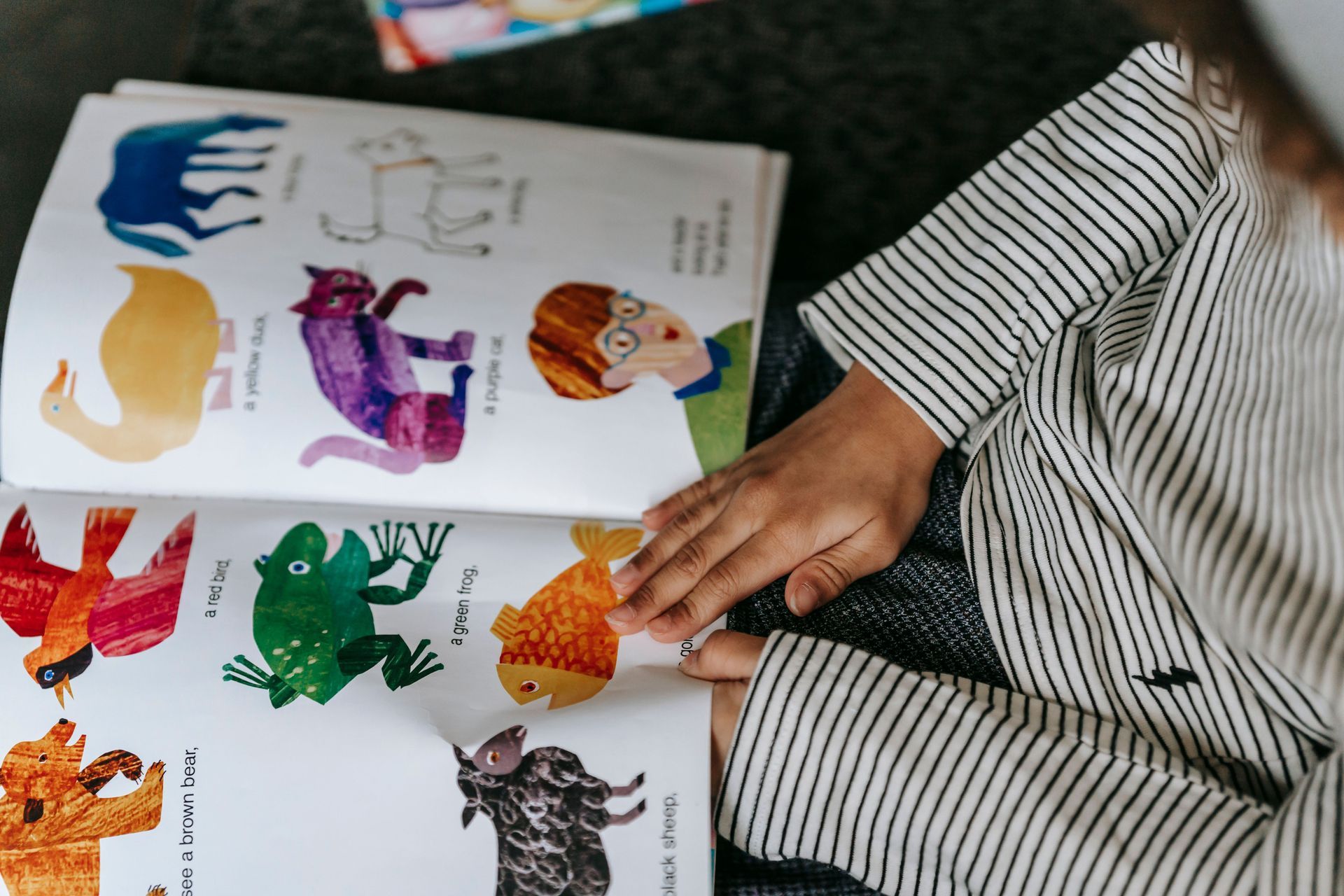
✔︎ Reading continues to improve spelling - even if it's not books. It could be instructions, billboards, signs, cereal boxes, notes back and forth between you both, texting. The more they see it, the more likely they will remember.
Some people are not great spellers. That doesn't really mean anything other than... they're not good at spelling. And maybe they're just not good at it YET. They don't need extra reminders about their Spelling Deficiencies. That can take it's toll on them in ways you may not even realize!
I want to tell you about my oldest child’s journey in Spelling.
And yes, I have permission to share these stories!
Michael had really bad spelling as a kid. And he had been an early reader at 4! But at nine, he had to take the CAT5 test to qualify for the free stuff from the Charter program we were using. He scored in the 1 PERCENTILE. That means that NO ONE scored below him that year. He had been in the “gifted program” at the school when he was in 1st grade.
So how does one *lose* all of that giftedness in a few years?
Because we unschooled?
I don’t believe that.
I believe his brain was busy with other things and the relevance of the spelling words was no longer there. He could still read whatever he needed. And I helped him with the words he didn’t know how to spell. He never took another spelling test and because I helped him when he had to write thank you notes, I never really paid attention to whether he could spell things correctly or not.
At about 15 or 16, he was interested in writing Fan Fiction, and discovered how the word documents do those little squiggly lines under misspelled words, giving you options for what the CORRECT spelling of that word could be. So he improved his spelling there in fan faction - using spell check - and used it as he moved into community college. He passed the assessments with no mention of bad spelling. And went on to be Magna Cum Laude in Journalism (with a minor in Archaeology/Anthropology ...because he was obsessed with Indiana Jones!) This past summer he completed his MBA - and spelling is no longer an issue.
So what happened?
I think his brain - at some point - decided he wanted to spell better. So he noticed the spelling of words he used or read and he retained it. That’s not really something you can teach someone to do - especially when they’re younger and don’t want to do it.
For a kid that gets older and cares about their bad spelling, they can get prompts or make accommodations like checking important writings with their mom to see if there are any misspellings - both of my girls still do that occasionally at 27 & 30! I’m their built-in proofer. Most of the time, spell check handles it for them.
The girls’ spelling never really improved the way Michael's did. But they didn’t really care - and still don’t. I see the spelling of their friends in texts, email, on social media... some are good spellers but just as many are not.
What I got from all of that is that drilling spelling words is a waste of time if the words aren’t relevant or the Learner is uninterested... or for whatever reason their brain just won’t do it.
You can’t coerce a brain!
And for those families that try to... the price they pay for trying is too high.
The kid ends up feeling dumb, the relationship is strained, and in the end, not that much ground is gained.
So, what's my best advice?
Let it go. Continue to support them. Correct them if the ask for it. Spell it FOR them, if they ask you to.
They WILL figure it out.
And then they'll retain it.
Related Posts/Pages