
What Gaming Actually Looks Like in an Unschooling Home
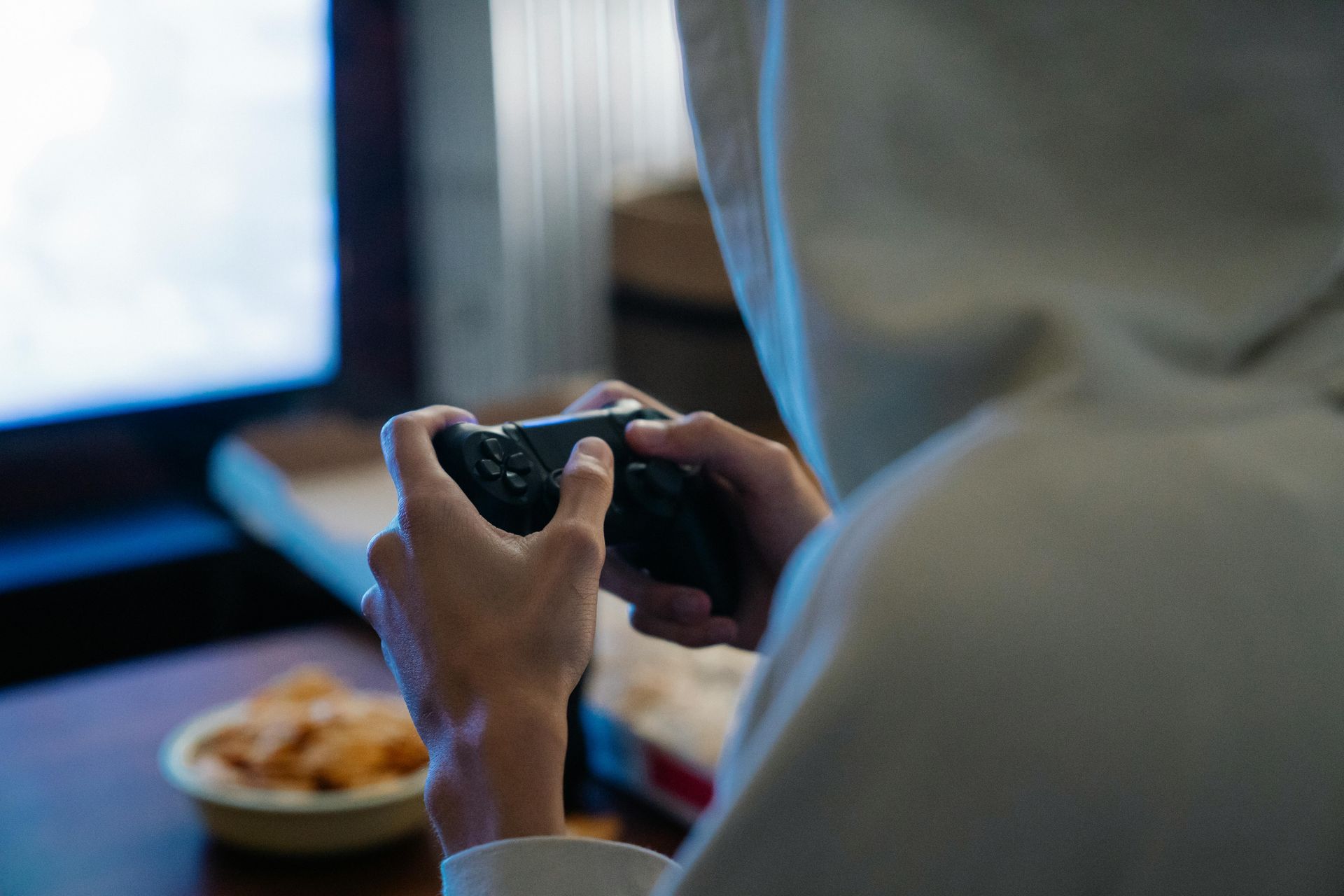
If you’re picturing a day where everything feels balanced and naturally well-rounded, that’s usually not how this looks in real life.
A lot of parents come into unschooling with some version of that picture. It’s easy to imagine a day where your child moves between different interests without much effort. A little reading, a little building, some time outside, maybe a conversation or a project that unfolds on its own. It all feels varied and connected, like learning is just happening everywhere you look.
And sometimes, parts of that do show up.
But most days don’t follow that kind of rhythm.
They don’t divide themselves evenly across different interests, and they don’t move neatly from one thing to the next. Instead, they tend to build around whatever your child is most drawn to at the time. That focus can last longer than you expected, especially when it’s something that holds their attention deeply.
When gaming is at the center, it often takes up more space than you thought it would.
Not just a part of the day, but something the day starts to organize itself around.
The Days That Feel Like “All Gaming”
There are stretches where it really does feel like that’s all your child is doing.
They wake up and go straight to it, and once they’re in it, it’s hard to pull them away for long. Even when they step away, it’s usually brief, and they come back to it quickly, almost like the rest of the day is just something to move through so they can get back to where they were.
From the outside, the day can start to feel repetitive. It can feel narrow, like everything else has slipped out of the day or stopped mattering as much. You might find yourself noticing how long it’s been, checking the time more often than you mean to, or waiting for something else to take over.
And underneath all of that, there’s often another layer that’s harder to name.
It starts to feel like you’re allowing something you shouldn’t be. That quiet, steady sense that you’re supposed to step in, redirect, or make something else happen. Like if you don’t, you might be missing something important or letting something slide that shouldn’t be left alone.
That’s usually when the doubt starts to creep in. Not all at once, but in small thoughts that come and go.
Is this too much?
Is this what the whole day is going to look like?
Should I be doing something different here?
What’s Actually Happening Inside Those Days
At the same time, those days usually have more going on than it seems at first.
Gaming isn’t a single, flat experience. Even within the same game, your child moves through different kinds of engagement. Sometimes they’re focused and working through a problem. Sometimes they’re interacting with other people. Other times, they’re settling into something familiar that doesn’t require as much effort but still holds their attention.
If you watch over a longer stretch, small changes start to show up.
You might notice how they approach something differently after struggling with it the day before. You might hear a conversation that picks back up where it left off. Sometimes it shows up in the way they begin to explain what they’re doing, even if they didn’t have the words for it at first.
Those shifts are easy to miss when your attention is mostly on how long they’ve been on the screen.
How the Day Actually Moves
Even on days that feel heavy with gaming, the day isn’t as still as it can look from the outside.
Things are shifting in small ways that are easy to miss if you’re mostly noticing how long they’ve been on a screen. They come out to eat, sometimes after a few reminders, and linger for a minute before heading back. They pause to tell you something that just happened, even if it’s quick and a little out of context. They switch games, look something up, or drift between things without fully leaving that space.
If you’re watching for it, you can start to see that movement.
It’s not a fully separate part of the day, and it doesn’t break things up in a way that feels obvious. But it’s there, woven through everything else.
The day is still moving.
It’s just organized around something different than you expected.
When It Still Doesn’t Sit Right
Even when you can see more of what’s happening, it doesn’t always feel better in the moment.
You might be standing in the kitchen, listening to the same game sounds coming from the other room, and feel that pull to step in again. Not because anything new has happened, but because it’s still going, and it still doesn’t quite sit right.
It’s not just about what your child is doing.
It’s the question that keeps running quietly in the background. Whether this is enough. Whether it’s balanced in a way that will hold up over time. Whether you’re missing a moment where you should be doing something differently.
Understanding more doesn’t turn that off.
It just means you’re holding both things at once. You can see what’s there, and you can still feel unsure about it at the same time.
What Starts to Change Over Time
What shifts first usually isn’t what your child is doing. It’s how clearly you can see it.
When you start to notice patterns, the day feels less like one long stretch and more like something with shape to it. You begin to recognize when they’re deeply engaged and when they’re just passing time. You start to see where things build, even if they don’t show up in obvious ways.
That doesn’t mean every day suddenly looks different. It means the day starts to make more sense.
When It’s Not Just Gaming
There are also stretches where something else takes over, but they don’t always line up in a way that’s easy to notice while you’re in the middle of it.
A new interest might pull them in for a few days, and then fade just as quickly. A project might show up in pieces, picked up and put down over time rather than carried all the way through at once. Sometimes it’s a conversation that keeps resurfacing, building slowly in the background without ever becoming the main focus of the day.
When you’re looking at a single day, those shifts can be easy to miss.
It’s much easier to see the thing that’s taking up the most space right now than the things that are coming and going around it. But if you start to look across a longer stretch, a week or two instead of a single day, a different pattern usually starts to show up.
You begin to notice what they circle back to. What holds their attention for a while and then gets replaced by something else. What keeps threading through their days, even when it isn’t the most obvious thing happening at the time. That kind of variety doesn’t always show up neatly inside a single day.
But it’s often there when you zoom out far enough to see it.
Where You Fit Into It
Your role in this doesn’t disappear.
It shifts into something that’s less visible from the outside, but more involved than it might look at first.
You’re not organizing the day or deciding what happens next, but you are paying close attention. You’re noticing how your child is doing in the middle of it, not just what they’re doing. You’re picking up on when they’re engaged and when they’re starting to fade, when something is building and when something feels off in a way that might need support.
That kind of awareness takes effort.
It usually means staying connected to what matters to them, even when it isn’t something you would choose yourself. It means having enough context to understand what you’re seeing, instead of filling in the gaps with assumptions about what it looks like from the outside.
Because without that connection, it’s easy to react to the surface. To step in based on how it appears, rather than what’s actually going on underneath.
And kids can feel that difference.
When your response comes from understanding, it lands differently than when it comes from uncertainty or pressure. It doesn’t always make things easier in the moment, but it does change the dynamic between you. It’s about being involved in a different way, one that’s quieter, but often more aligned with what your child actually needs.
When It Still Feels Unsettling
Even when you understand all of this, there are still going to be days where it doesn’t sit right.
There will be days where it feels like too much, days where you question whether you should step in more, and days where the doubt feels louder than everything else.
That’s part of this. And it’s usually the point where having support matters most, not because something is wrong, but because it’s hard to hold that uncertainty on your own.
Having Somewhere to Take It
It helps to have a place where you can talk through what you’re seeing without having to explain or defend it first.
When you’re talking with other parents who are living this too, the conversation starts in a different place. You’re not trying to justify your choices. You’re sorting through real situations with people who recognize the same patterns and are asking similar questions in their own homes.
That’s the kind of space the Creating Confidence Community is built around.
You’re not getting quick opinions or surface-level advice. You’re working through what’s actually happening, with guidance that helps you come back to your child feeling more clear and more steady.
It Doesn’t Stay One-Dimensional
At first, gaming days can feel like they take up everything. They’re the most visible part of the day, and they’re usually what sticks with you afterward, especially when you’re replaying it in your head and wondering if you should have stepped in differently.
Over time, something begins to shift, and it’s not always obvious right away. It’s not that gaming disappears, and it’s not that the day suddenly looks balanced in the way you imagined it would. It’s that you start to notice more of what’s happening around it and underneath it.
You see how your child moves in and out of it. You notice what draws them back and what eventually pulls them away. You start to recognize the other pieces that are there, even when they aren’t the loudest part of the day.
Those gaming stretches are still there, and there are still days where they feel like a lot. But they don’t take over in the same way, because you’re not only seeing the most visible part anymore.
You’re seeing more of the whole picture, and that changes how much weight those moments carry when they show up.