School Lies Living Rent-Free In Your Head?
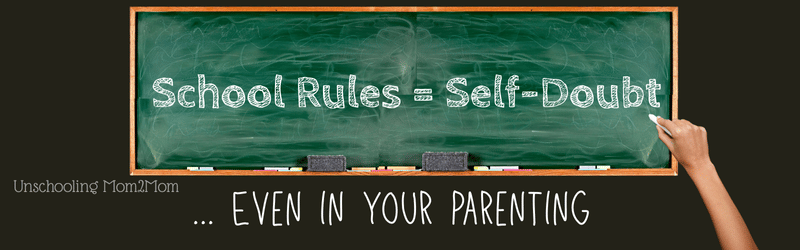
School Messed with Your Head
Most of us don’t like to think of it that way... but school left behind more than math worksheets and cafeteria memories.
It planted beliefs we didn’t even realize we were carrying—about success, worth, failure, and even what “real learning” looks like.
It was shaping how we see ourselves, how we parent, and even how we value creativity and curiosity.
In this episode, we’re digging into 3 hidden “lessons” school taught us that still show up in our lives every day:
- Follow directions. Don’t ask questions.
- Creativity only counts if it looks like everyone else’s.
- If you don’t fit the mold, you’re the problem.
These aren’t just school rules—they’re a kind of brainwashing we carry long after graduation.
You may not even realize how much this is creeping into your parenting—but it’s probably at the heart of why you’re doubting yourself so much.
Hidden Lessons from Our School Days
When most of us think back on school, we remember the schedules, the rules, maybe even the social rankings. But underneath the math worksheets and grammar drills, school taught us some hidden lessons. And those lessons shaped how we see ourselves, how we parent, and how we move through the world.
The problem? Most of those lessons weren’t good for us.
Unschooling gives us the chance to stop passing them along to our kids. Here are three of the biggest “stealth lessons” school tried to teach—and how unschooling unravels them.
1. Follow directions. Don’t ask questions.
In school, compliance was the name of the game. Sit still. Do what’s assigned. Don’t question why.
As adults, that conditioning shows up in subtle ways:
- Waiting for someone else to tell us the “right” way to parent.
- Second-guessing ourselves instead of trusting our gut.
- Looking for authority figures to give us permission.
But learning doesn’t thrive in a world of blind obedience. Unschooling flips the script. Instead of training kids to wait for instructions, it helps them follow their curiosity. Parents don’t need to hand out lesson plans—we create an environment where discovery is welcome, and curiosity leads the way.
2. Creativity only counts if it looks like everyone else’s.
School rewards sameness. Line up your paragraphs. Show your work exactly like the book. Don’t stray too far outside the lines.
And many of us still carry that into adulthood.
- Comparing ourselves:
Am I doing this as well as she is?
- Feeling guilty when our kids learn differently than our neighbors’ kids.
- Believing there’s one “right” way to parent.
But unschooling reminds us: there’s room for everyone at the table. We don’t need to compete for rankings or copy off someone else’s paper. Each child brings their own strengths—and when they grow up outside of grading systems, they don’t learn to doubt themselves just because they’re different.
3. If you don’t fit the mold, you’re the problem.
This may be the harshest lesson of all. In school, if you struggled with the format, the problem was supposedly you. You’re behind. You’re lazy. You’re not smart enough.
As adults, those old messages echo in our heads:
- Feeling like impostors even when we’re capable.
- Constantly worrying that we’re “not enough.”
- Doubting ourselves whenever something doesn’t look standard.
Here’s the truth: we were never broken. The system was.
Unschooling refuses to carry that lie forward. Kids grow up knowing learning is flexible, growth happens in its own rhythm, and their pace is not a flaw. That builds confidence that lasts a lifetime.
The Brave Shift
For us as parents, the challenge is unlearning those lessons ourselves. It takes courage to stop conforming, to stop placating the status quo. But when we do, we give our kids something better:
- Permission to be curious.
- Space to be creative.
- Confidence to trust themselves.
That’s an education no grading system can measure. And it’s the one that sets them up to thrive in the real world.
Want some help?
If you’re ready to break free from those old school lessons but feel unsure where to start, my Unschooling 101 course can walk you through the first steps. Or, if you’d like community and encouragement along the way, check out the Unschooling Mom2Mom Membership—a place where parents find support, courage, and practical help as they make this shift.