10 Weird Facts About Daylight Saving Time: A Real-Life Learning Opportunity

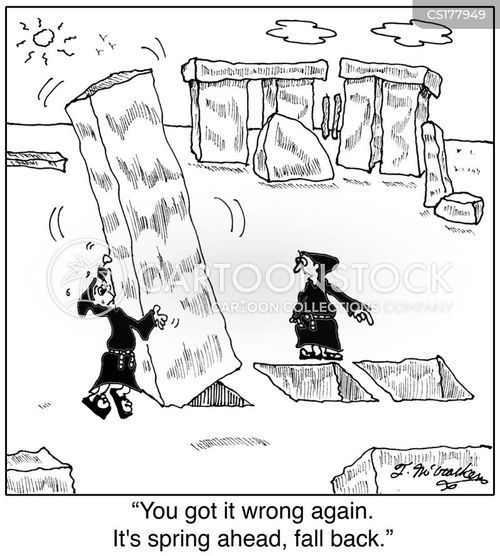
Spring forward, Fall back
- But WHY?
Quick Answer for the Kids:
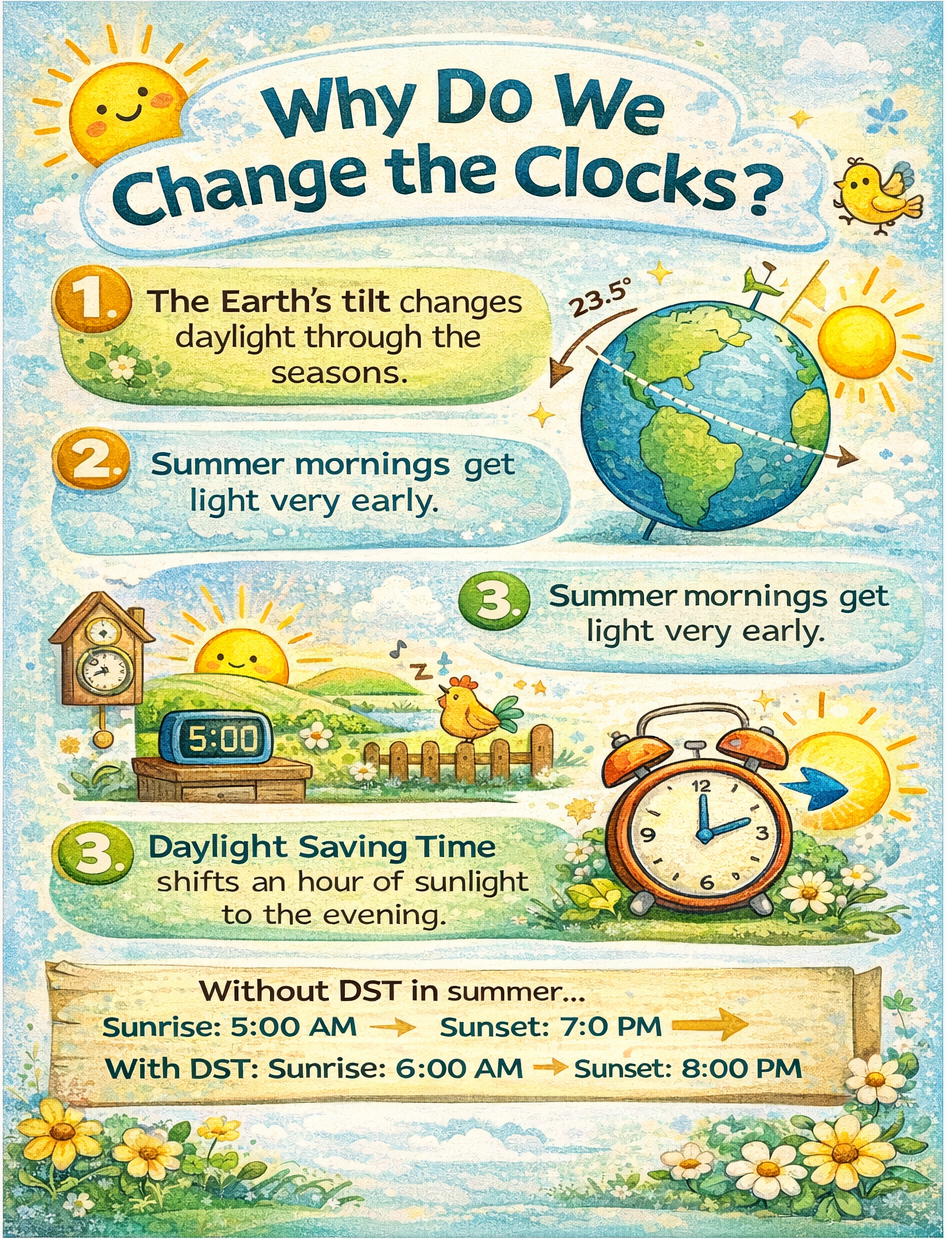
The Earth’s tilt changes how much daylight we get during the year.
Daylight Saving Time just moves the clock so we use more daylight in the evening.
Daylight Saving Time = Real-life Learning Moment!
One small event → math, science, history, writing, creativity, and technology.
No curriculum required.
Moments like the clock change show how learning naturally overlaps subjects.
You don’t need a lesson plan or curriculum to explore it
— just curiosity and a few good questions.
Subjects Weave In Here?
Yes! They do!
Math
Daylight Saving Time naturally introduces elapsed time and time changes.
Language Arts
Kids can read explanations of Daylight Saving Time and learn new vocabulary like: time zones, daylight, rotation, circadian rhythm.
Science
DST connects to
Earth’s rotation and daylight cycles.
SciShow Kids:
Why Do We Change the Clocks?
Social Studies
The history of Daylight Saving Time is a fascinating look at how governments make decisions. Which states and countries participate in this - and which don't! Why?
Why Do We Have Daylight Saving Time? | COLOSSAL QUESTIONS
Technology
Technology helps us track and understand time changes. Use weather apps to compare sunrise and sunset times.
Learn more about how digital devices automatically adjust the clock.
Check out global time zones using online maps
🎥
Daylight Saving Time 101 | National Geographic (Bigger Kids)
FUN FACTS
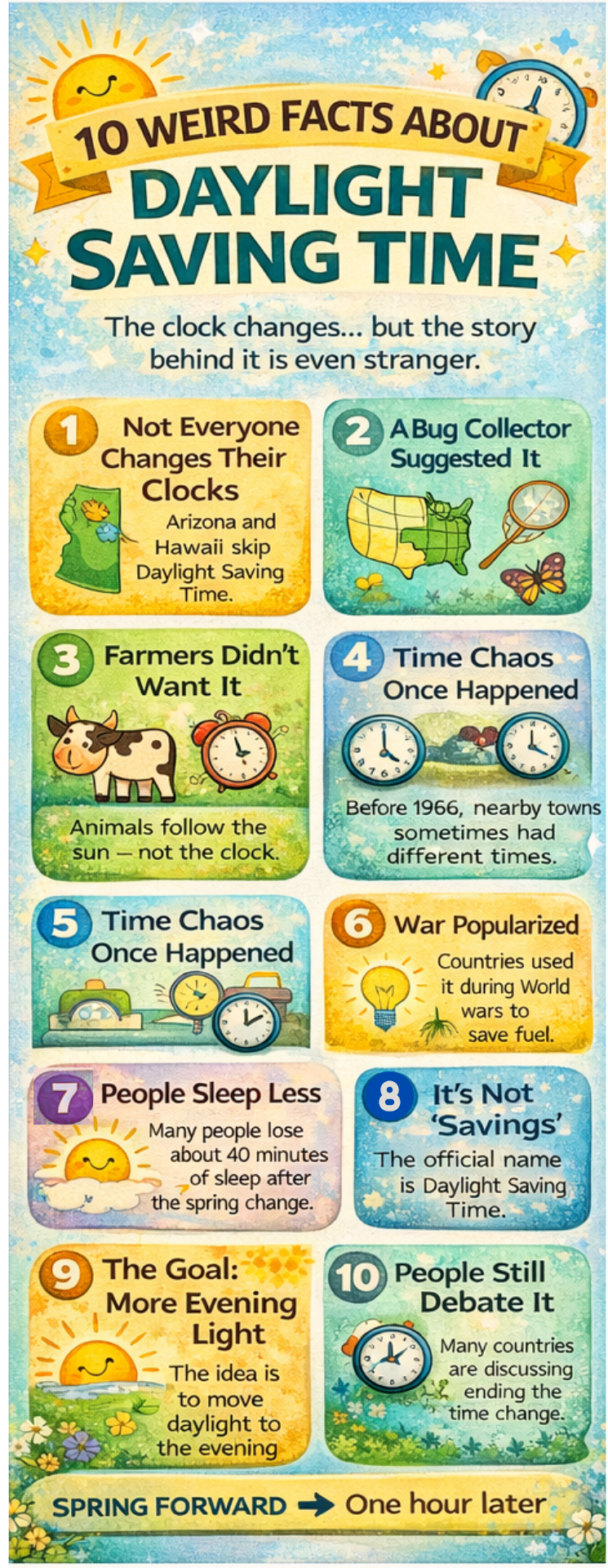
1. Not Everyone Changes Their Clocks
Hawaii and most of Arizona stay on the same time all year. They stay on standard time all year. The Navajo Nation inside Arizona does observe Daylight Saving Time, which means some nearby towns actually have different times depending on where you are.
Why?
These regions get plenty of sunlight already, so shifting the clock doesn’t provide much benefit.
2. A Bug Collector Suggested It - or was it a Golfer?
George Hudson (1895): Proposed a two-hour shift in New Zealand to maximize evening sunlight for collecting insects.
William Willett (1907): Published "The Waste of Daylight," advocating for advancing clocks in the spring to increase daylight hours. His proposal was motivated by wanting to spend more time outdoors, such as playing golf.
3. Farmers Didn’t Want It (That's a Myth!)
Farm animals follow the sun, not the clock. This change was not for farmers.
4. Time Chaos Once Happened
Before the Uniform Time Act of 1966, U.S. states and cities could decide on their own whether to observe Daylight Saving Time and when to start or stop it.
This created confusion.
In some places, a short bus trip could involvechanging the clock several times.
Trains Forced the U.S. to Create Time Zones
Before railroads, every town set its own time based on the sun.
Trains made this confusing, so time zones were created in
1883.
In 1965, traveling 35 miles between Steubenville, Ohio, and Moundsville, West Virginia required changing the clock seven times
because different towns used different rules. The 1966 law standardized when clocks would change.
5. War Popularized It
Daylight Saving Time became widely used during World War I and later World War II.
Governments hoped shifting daylight hours would reduce energy use, especially for lighting and fuel. During World War II, the United States even used year-round Daylight Saving Time, called “War Time.”
6. People Sleep Less
People often lose about 40 minutes of sleep after the spring change.For a few days afterward, there may also be increases in fatigue and difficulty concentrating.
It usually takes several days for people’s sleep schedules to adjust.
7. It’s Not “Savings”
The official name is Daylight Saving Time, not “Savings.” The idea is that we are
saving daylight by moving an hour of sunlight from the early morning to the evening.
8. Some Places Shift by 30 Minutes
Several countries around the world use unusual time offsets like UTC +5:30 or UTC +9:30, showing that timekeeping isn’t always based on whole hours.
Lord Howe Island (Australia) changes clocks by only 30 minutes.
9. The Goal: More Evening Light
The purpose of Daylight Saving Time is to
shift daylight into the evening hours, when people are more likely to be awake and active.
For example, instead of the sun rising at 5:00 AM and setting at 7:00 PM, the clock change makes it rise at 6:00 AM and set at 8:00 PM.
This gives people more daylight after work.
10. People Still Debate It
Daylight Saving Time is still controversial.
Some people want to:
- Keep it all year for longer evening daylight
- Eliminate it entirely and stay on standard time
Several governments are currently debating these options, and laws occasionally change as countries reconsider the practice.
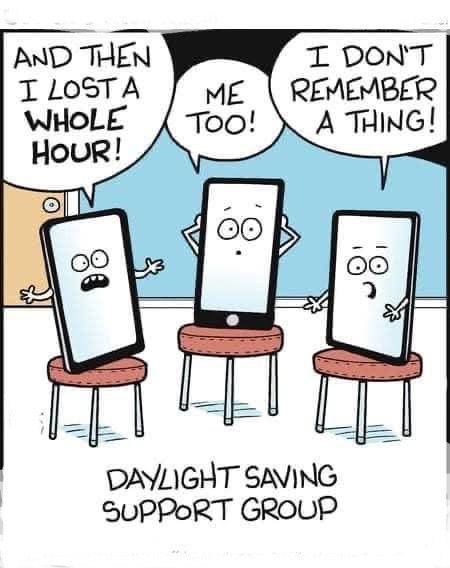
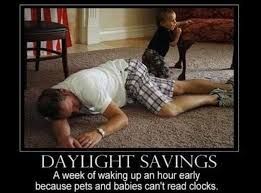
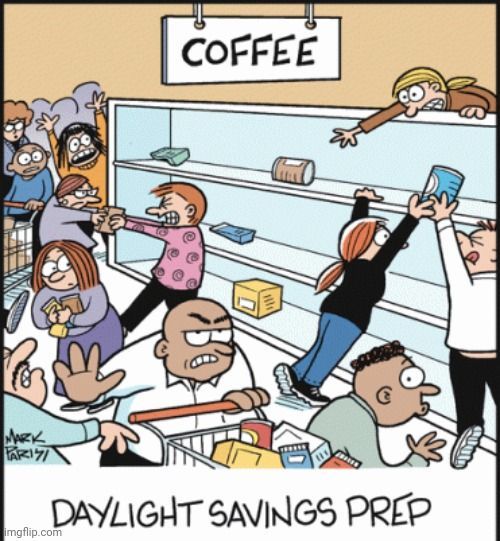
Here for the Memes?